Picture a house – quaint, unassuming, attractive – the inside of which is harboring a maze of despair just outside of view, but you don’t know this, so you cross over its threshold willingly like an old friend. You walk in the door, welcomed by a warm, inviting, candlelit foyer. You find yourself sitting on the soft, plush couch, relaxing, drinking, dazing. Just out of the corner of your eye, you see a dark hallway. Do not acknowledge it. Continue bathing in the ambiance. Your eyes are drawn to it. You squint to glean a sense of its depth, of the amount of rooms that linger just out of frame. You rise from comfort, peering into the darkness, the ever-lasting void stretching out just beyond your grasp. As you walk through the gaping black, the warmth fades, and your hands twist around a cold, metal doorknob. You’re opening the first door. Welcome to 2023.
Welcome to The House
Here you’ll find some scraps of essays I am stitching together from media I consumed in 2023. I have not written an essay in quite some time. I was suffering from the kind of burn out you experience when you have an abusive, toxic workplace in the capitalist hell scape of America. Get ready for a lot of death and horror. I do hope you enjoy your stay.
In 2022, I made one of my resolutions for 2023 to play more video games, and I did just that, but my fingers continued to trace along the same threads. Let me weave them together for you, and hopefully convince you to enjoy some of them along the way.
Spoilers for everything.
Room One
Return of the Obra Dinn is a game you can only play once.
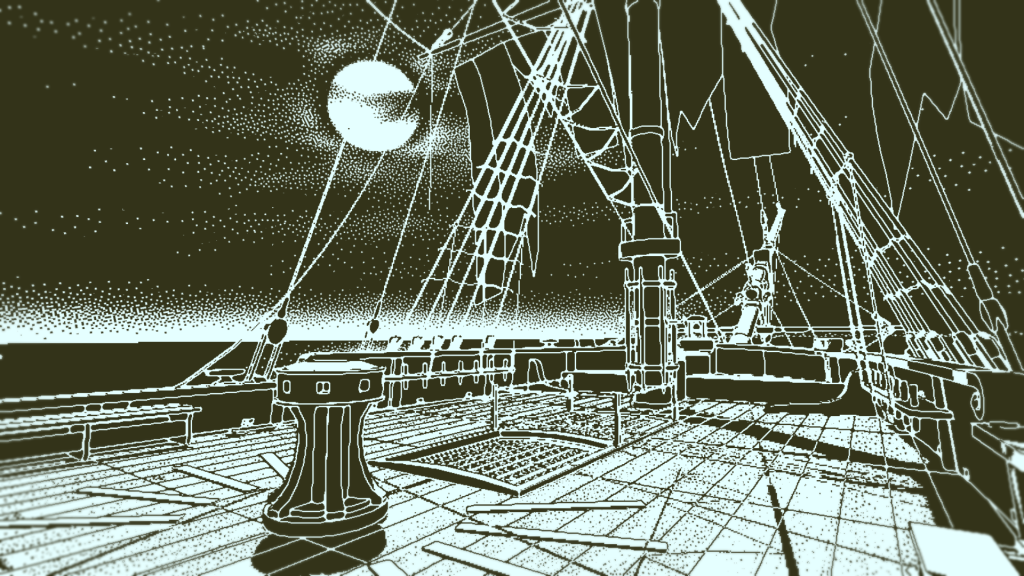
Unlike most mystery games I’ve played, where you pick up clues and the character you’re playing will come to conclusions to move the story, the Obra Dinn is a real mystery where you use your own deductive reasoning to solve it. You play as an unnamed investigator that boards a ship that had been lost at sea for five years and your goal is to write down the fate of each passenger and crew member. Using a magical pocket watch, the Memento Mortem, you explore the ghost ship and travel back to the middle of these chaotic scenes to establish how each person met their end. Some of the mysteries are straightforward, and others will have you inspecting bunk beds, tattoos, wedding rings, and shoes. You’ll also need to return to these scenes frequently to piece together the puzzle as more information is revealed. The game follows a rule of threes – you must accurately guess three fates in a row to lock them in. In each fate, the person’s name and cause of death must be correct before they are confirmed canon.
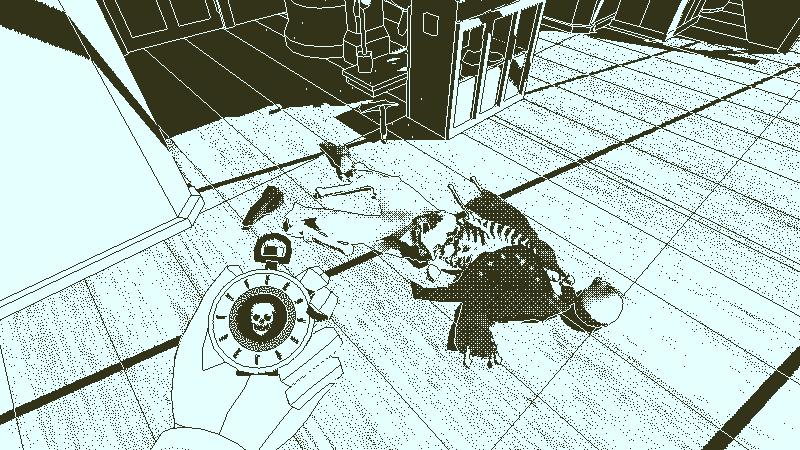
I want to refrain from spoiling the puzzle because as I mentioned, this is a game you can only truly play once. In his video essay, “How Return of the Obra Dinn Turns You Into a Detective,” Game Maker’s Toolkit discusses how “figuring out how someone died is rarely truly a challenge, the tricky part is figuring out who they are.” And while there are quite a few ways to find that information, after I finished the game, I had fun deep diving into Let’s Plays and exploratory essays about how other people online solved the mystery for themselves. Often the game had me at my wit’s end. Although I loved the monochromatic dither style graphics, I found myself pretty sea sick.
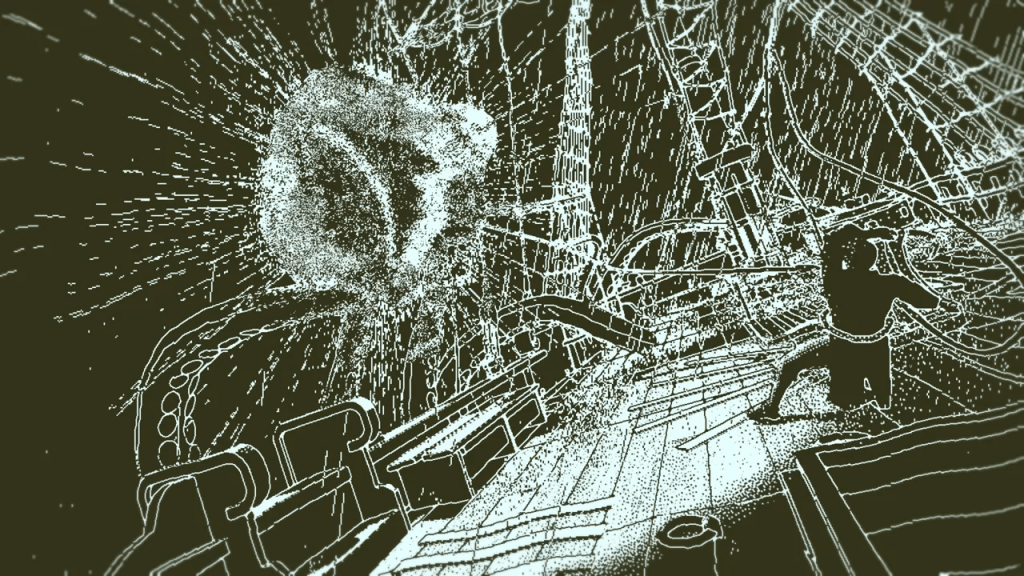
These death vignettes we see in the Obra Dinn are fascinating in that they are visual explosions needed to cross-reference hidden and obscured information. They are bombastic, overstimulating, and dynamic from all angles. What touched me about the story, besides how fun it was to solve, was the sheer importance of giving the passengers of the Obra Dinn their closure, closing their chapters by assigning the correct details to what happened to them. In the scope of the game, this info is needed for a very clinical reason – there’s paperwork necessary to process an insurance claim for the ship, its inhabitants, and whose estate is owed (or owes) financial compensation for the voyage. However, I was taken by the undercurrent theme of their deaths as needing to be solved, and how important it was to identify them. There are sixty people with sixty unique stories dying from supernatural occurrences, accidents, mutinies’, or murders, and without spoiling too much, some of them do survive.
There were a few crew members I’d be looking at, like George Shirley for instance, where I was perplexed for so long. Every person who plays this game has at least one crew member they’ll never forget for this reason. You’ll be looking at someone’s portrait and their presence in the vignettes and just wondering who the hell they are. Some of them are tough. You’ll know how they died, but not their name. It can be super frustrating. It needs be remarked that guessing is not a real strategy that works here due to the rule of threes, but it can help you in a pinch if you’re confident in your other two fates. You’re relying on audio clues, accents, name drops, as well as relationships with other crew members or passengers. Solving identities using that last method was really difficult for me, as someone who is not familiar with the extensive roles on a ship such as the Bosun. The Obra Dinn is one of the most rewarding experiences I’ve ever had gaming, and I recommend it to anyone who loves a good spooky mystery, a brain bending challenge, and the satisfaction of putting a face to a name.
Room Two
I sort of played this game called ANATOMY. I sort of played it because it freaked me out so much that I made my friend Tyler walk through all of the really scary parts and yelled at my friend Tom for putting it on the television, turning all the lights off in the apartment, and dropping it into our laps. (Thanks boys!) ANATOMY is a bite-sized game with a conceit I’d rather not spoil, so if you’re interested in creepy cassette tapes, haunted houses, or retro analog horror, I’d skip this section.
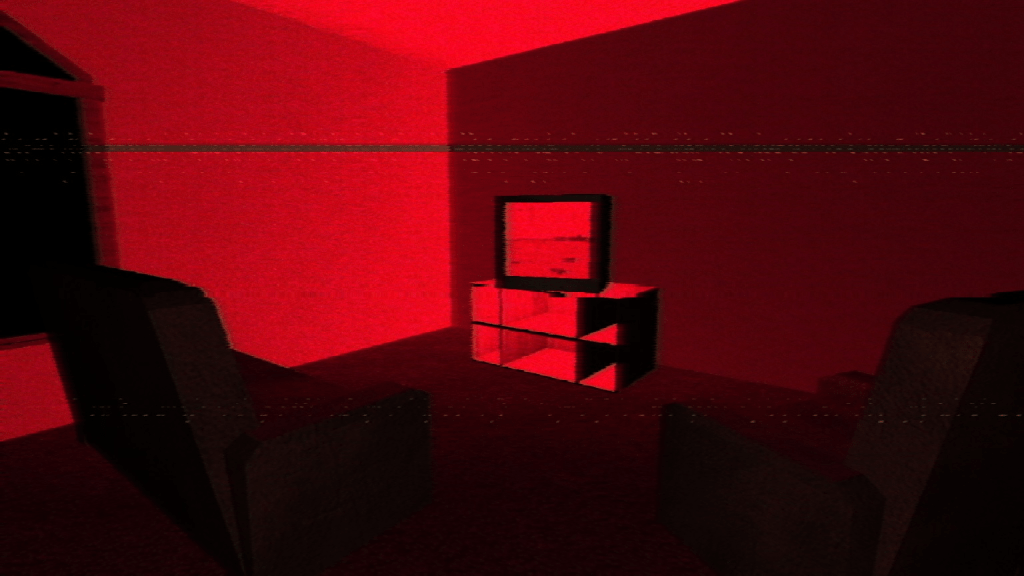
ANATOMY is a really interesting game about a haunted house because the house is not haunted in a conventional way where something’s lurking in the shadows like a ghost or a monster. In “ANATOMY Is a Masterpiece of Cassette Tape Horror,” Chris Priestman writes:
ANATOMY whispers in your ear that there’s probably a monster in a room before you enter it, letting your own expectations grind you down to a tense wreck of a person. That it does this again and again draws the debilitating effect out, masterfully building up the terror but constantly denying you the begging release of a scream. It’s the kind of horror that gets so deep into you that it seems to scratch away at your bones.
There is nothing in the house besides you – you are the intruder. The house will try to communicate with you through the technology within such as the tapes and the television, will warp reality, and alter its form into architectural paradoxes to scare you off. As you enter each room, you are unwelcome. Your simple exploration is an invasion of privacy. Naturally, as its anatomy is being degraded, disregarded, and disrespected, the house will eat you. The scariest part of this game is what you’re bringing to it, as Priestman says, your expectations with playing a horror game – it explores how much horror is in the anticipation of something jumping out. When nothing jumps out, the only terror is your own.
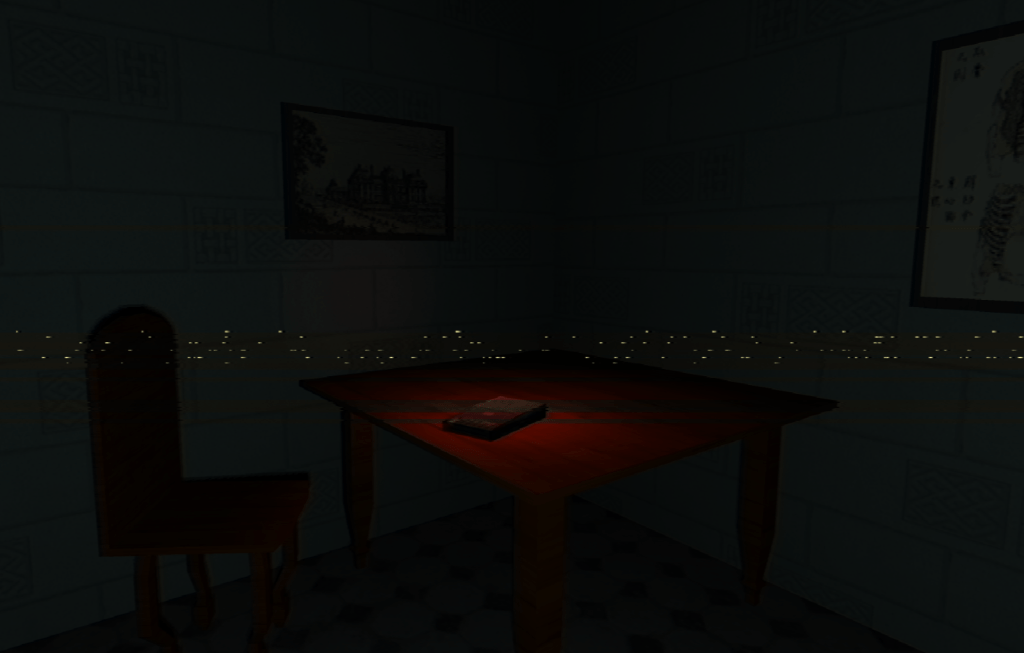
The game is so dark and obscures your vision; often you’ll need to enter a room or descend/ascend a staircase before you can see what is at the other side of it, and sometimes, you’ll be forced to turnaround and really, really look for small objects. The magical surrealism of ANATOMY sets it apart from other works in the genre. In this case, the house is not a metaphor or interpretation of the psyche of the person inside it, but rather, very much alive. The game also crashes four times, forcing you to boot it back up. You are effectively kicked out of the house, but violate it continually to get back inside to explore its rooms. Ultimately, the game’s lack of humanity is what is so intriguing – there is no person or haunt or remnants of human life. The house stands on its own, mirroring the anatomy of a person, wishing to be uninhabited by a stranger. It dissects the ways we interact with objects we do not perceive to have a pulse or organic matter, but how these places become living through their own histories, even if that history is not laid bare for us to access.
Room Three
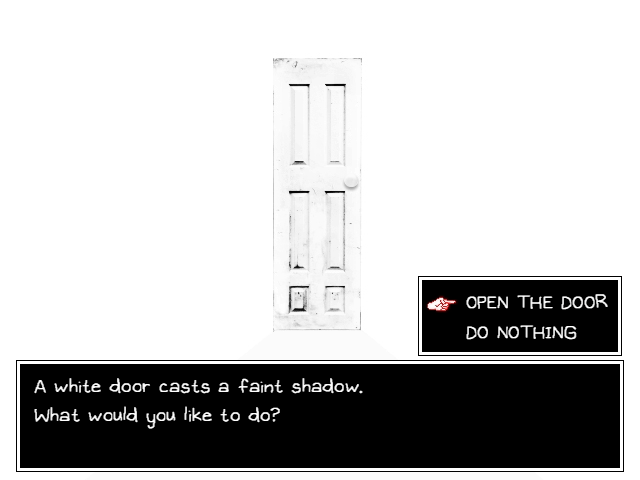
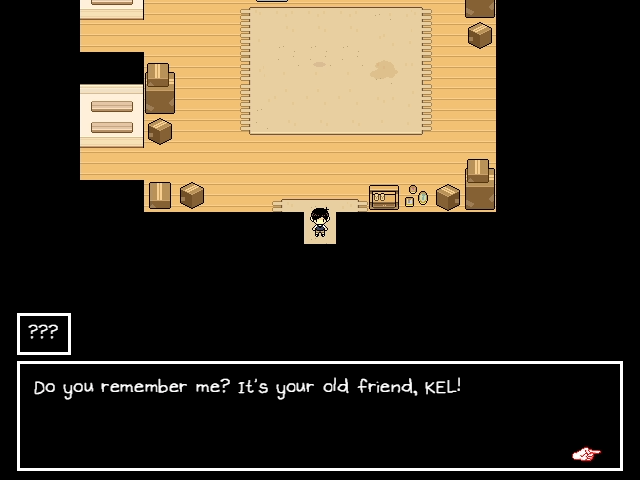
Omori is a psychological horror game about a boy named Sunny who is alone in his childhood home on the precipice of a move, grieving the death of his sister. He is left in the skeletal remains of a house with only boxes and his own thoughts to keep him company. There are two paths in Omori split by a single decision. If you open the door, Sunny leaves the house. If you do not open the door, the house will consume you. Opening the door, he begins processing his grief. He mends relationships with friends by connecting and comforting them; He is not alone in his loss, guilt, sadness, desperation, or anger. You see Hero’s sadness, Kel’s perseverance, Basil’s guilt, and Aubrey’s anger. Leaving the door closed, he will not form those connections and will be dreadfully alone.
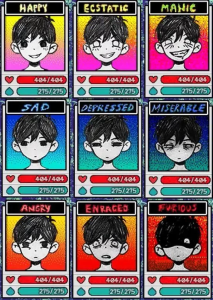
One notable thing about Omori is the battle system’s focus on emotions. The emotional state of the characters and enemies correlates to how they interact, as well as their strengths and their weaknesses against other emotional states. I found the emotions in battle to be a refreshing take on the elemental type against type we often see in RPGs, playing into the themes of the game, the character’s personalities, and how they cope with their grief. The emotions become disturbing the deeper they go, with characters becoming manic, miserable, or furious, and increasingly difficult to control in battle.
How does Omori approach its horror? In the beginning, there’s an undeniable sense that something is uncanny or wrong, but a palatable amount. The game lulls you into a false sense of security with its neon colors, peppy characters, upbeat music, and whimsical humor. If you’re like me, you might know Omori is a horror game, and if you’re even more like me, you might even forget it’s a horror game as you’re playing it. If you’ve played Doki Doki Literature Club, you know the vibe. The delineations between the worlds that Sunny creates are stark with color-coding to differentiate them – Omori’s black and white scheme matches White Space (occasionally introducing a piercing red), the childish, rainbow technicolor of Headspace, and the subtle neutrals of reality. The characters and their dynamics in this isolated dream world make the real world revelations all the more heartbreaking and Headspace increasingly difficult to leave. I wanted to hold onto the tender, heartwarming moments as long as possible.
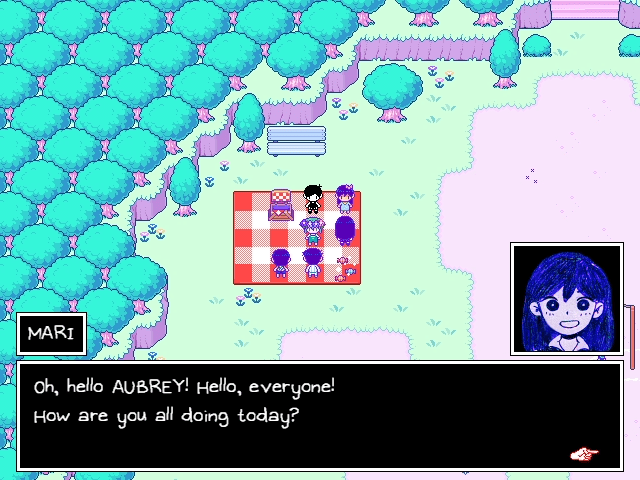
Some of the most precious moments are the friends huddling around the safety of Mari’s picnic basket, her presence so comforting, paired with delicious snacks that heal the party. As the game goes on, you know there’s something about Mari, even before you fully grasp what it is. How long it takes for those pieces to align really depends on the random haunts and how directly you see them connect to her. Some of the jump scares are determined but others are completely at the mercy of RNG. There are also genuinely scary moments in this game: when Sunny wakes up and looks around his room at night, anytime you look into a mirror, and peering down a dark crack in the floor wondering what will be staring back at you. These are just some examples of times I would be looking at the television through my fingers, yearning to go back to Headspace for another adventure. And at the end of all that, I still don’t think there’s anything truly more pathetic and deranged than the microwaved steak Sunny cooks himself for dinner.
Mari is your safe haven in the Headspace, but in reality, she doesn’t even have a bedroom – where is she? Why does she not battle along with your other friends? Why does Basil disappear and why do we feel so disconnected to him? Why are we Omori in Headspace, but Sunny in the real world? What was lingering in the fog?
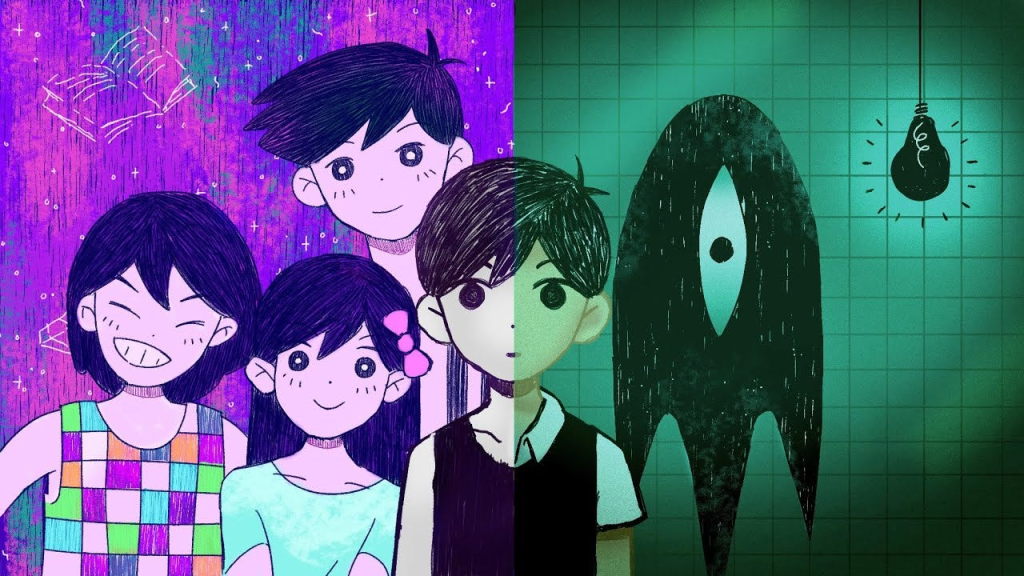
No matter which route you take, there will be Something following you. This Something will permeate Headspace, reality, White Space, Black Space – every space Sunny has created in his fragmented subconscious to avoid it. This Something is a horrifying, blank stare. It is his sister, Mari. Her death an irreconcilable trauma that he is working to keep buried, deeper, deeper, deeper, but the truth of which is haunting him.
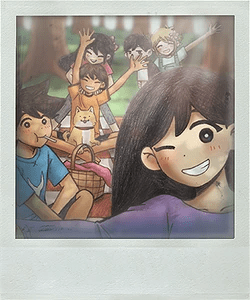
Sunny and Mari got into an argument about their upcoming musical recital. Sunny pushed Mari down the staircase onto his violin, destroyed it, and accidentally killed her. Sunny and Basil initially thought she is unconscious and would wake up again. Basil panicked and came up with a plan to stage her death as a suicide. The boys took her to the backyard, and pulled her into a tree to hang from. When they turned around, they saw one of her eyes looking back at them, which traumatized them both and created the Something. Hero, Kel, Aubrey, and the rest of the town were left to grapple with the intensity of her “suicide” as the boys carried this festering secret for years. No one saw her death coming, they blamed themselves, and their friendships splintered off as a result. It was so interesting to take these characters’ distilled roles in Headspace and see them in reality, years after Mari’s death, and how they are so damaged in such different and understandable ways informed by their histories and personalities.
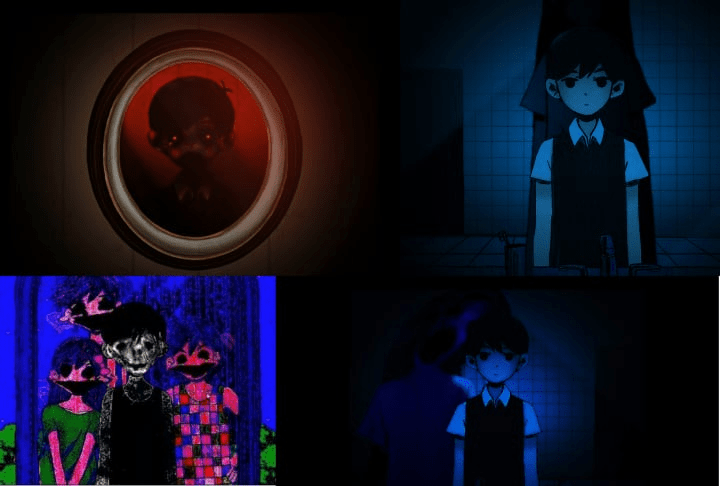
The game is a disturbing masterclass in how recurring symbols and objects can twist their meanings for chilling, gut-wrenching payoffs, like Mari and the Something. Omori is a persona Sunny created; he becomes Omori to distance himself from his perfect reality. He is so guilt-ridden that he can’t even place himself into a reality where he is having fun with his friends and his sister. To disassociate from his identity, he makes a human manifestation of the piano Mari used to play, so the Omori character is this walking embodiment of the reason they got into an argument over the music recital and she fell to her death. In order to take control back, Sunny needs to “defeat” and accept Omori to forgive himself.
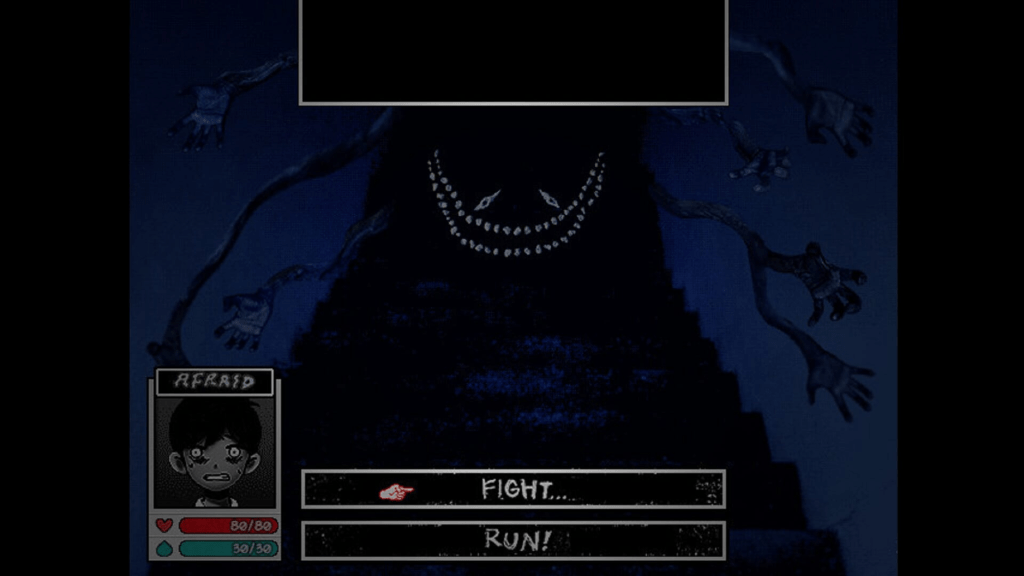
There are so many childhood memories tainted by death. Sunny sees the stairs as never ending. He sees hands grabbing, pulling, pushing, and spiraling in the wallpaper. These sequences where you walk Sunny through panic attacks were so powerful to me. The room where his broken violin is hidden completely disappears from the house. He mentally blocks out the door until the end of the game, where he confronts the truth. Throughout the story, Basil’s photos depict various emotional states: the wholesome nostalgia for days gone by, tangible reminders of the times they will never have again, and even the tragic night of Mari’s death. Some of these photos are real, but others are metaphorical snapshots of memory. The photo sequence at the end of the game retching emotions forward into a crescendo of uncanny horror as these objects preserve the unfiltered past.
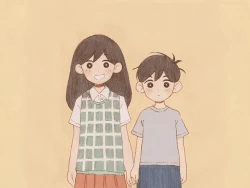
I loved Omori. I loved its bittersweet story about forgiveness, love, friendship, and its explorations of loss, trauma, and grief. I loved its mixed media aesthetic, music, and how the characters feel real and genuine. I loved how despite how horrific and unsettling it was to play, it was also full of warmth and humor. The ultimate revelation of the “good ending” is forgiveness. There is a beautiful sadness, where Sunny sees Mari for who she was – not a Something, but his older sister – someone who protected him, and who loved him and their friends dearly. Mari was a human being. She was kind, gentle, and compassionate, but she was also a perfectionist who pushed herself to achieve greatness, not seeing that Sunny took an interest in the violin to be closer to her, not because he wanted to be a musician. We never get to see that recital, but the emotion that pours out of Sunny in the final act is the music of their life and their relationship, how they paired perfectly together, but as the song ends, the piano stops and the violin carries on just a little longer.
Room Four
What Remains of Edith Finch is what many would call a walking simulator, but I hate that term, so I’ll call it an interactive novella. You play primarily as Edith, the last of the Finches, who is exploring her abandoned ancestral home after almost a decade of absence, going through each room and corresponding familial death. The deaths are shown in flashback sequences through their POV as Edith pieces together her family tree and the Finch “curse” of dying tragically.
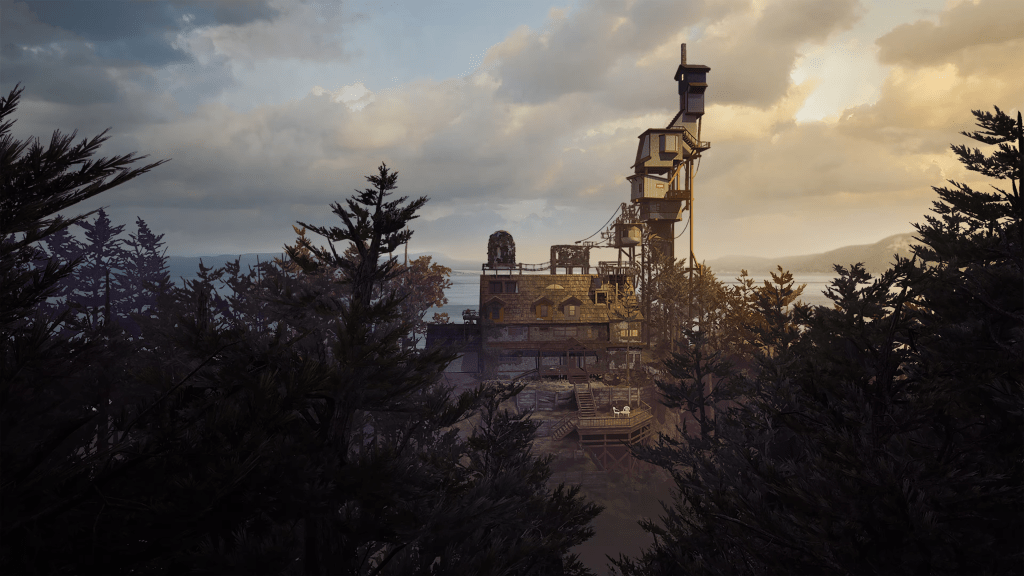
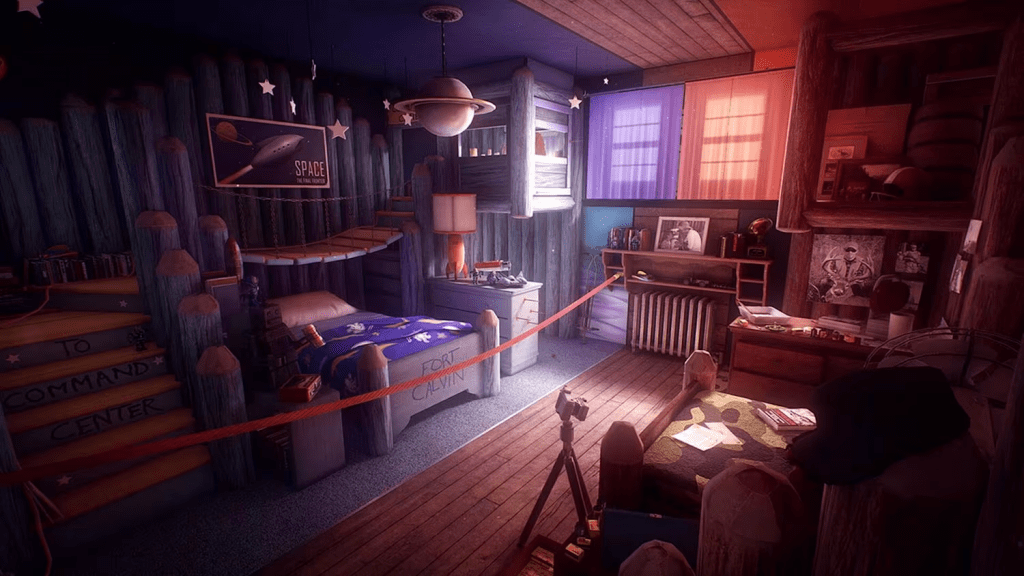
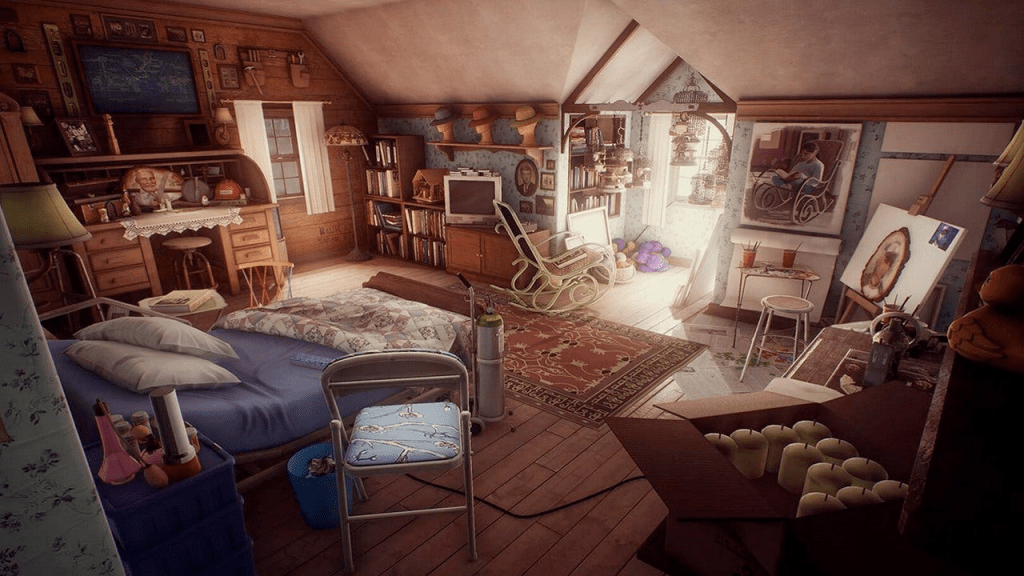
While you’re making your way through the house, you will notice something odd – each Finches’ room is preserved and frozen in time like a diorama. The house is made up of memorials to those who have died, and not just the people, the pets and any other living creature that graced its presence there. To be in the Finch house is to walk amongst these art installations: graves, plaques, portraits, and testimonials. People become a catalogued memory. There’s the mysticism of the supposed curse and untimely deaths, but ultimately, Edith Finch is about narrative. It is about how the stories we tell ourselves can be twisted into something fantastical to avoid trauma, change, and responsibility. We tend to find comfort in explanations for inexplicable tragedy. Digging a little deeper, each death is explicable and perhaps preventable, if not for the Finches’ self-fulfilling prophecy of looming demise.
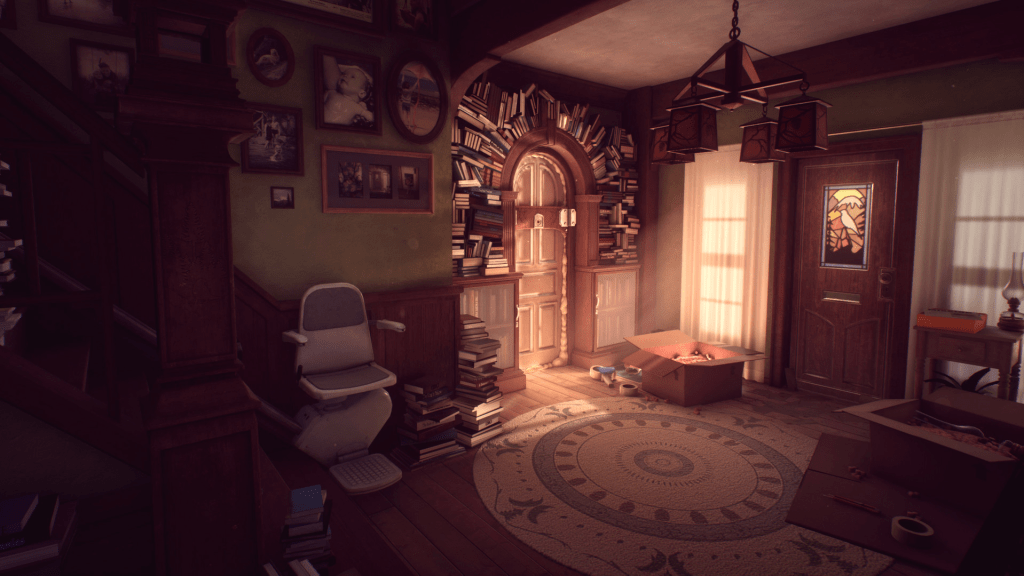
As I walked through the house, I noticed the books – they repeat, over and over. One of the books is Edie Finch’s memoir about the curse. A huge, spiraling, unwieldy house filled with books in every single room, on shelves, in walls, piled on floors, packed to the brim, and spilling out. You look a little closer, they’re copies. Each room has thematic books that relate to the Finches’ “special interests” like someone bought up a bunch of copies to pad them out. The game designer pasted the same texture over and over. I understand how time-consuming and difficult it is to program a game and create unique textures, so you may write this off as cutting corners. I’d disagree – the books are a powerful symbol of the Finch ideology. The stories are there strictly for show and the contents irrelevant. The point is upon first glace, the Finch family seems worldly, well-read, and intellectual. To be seen and not read.
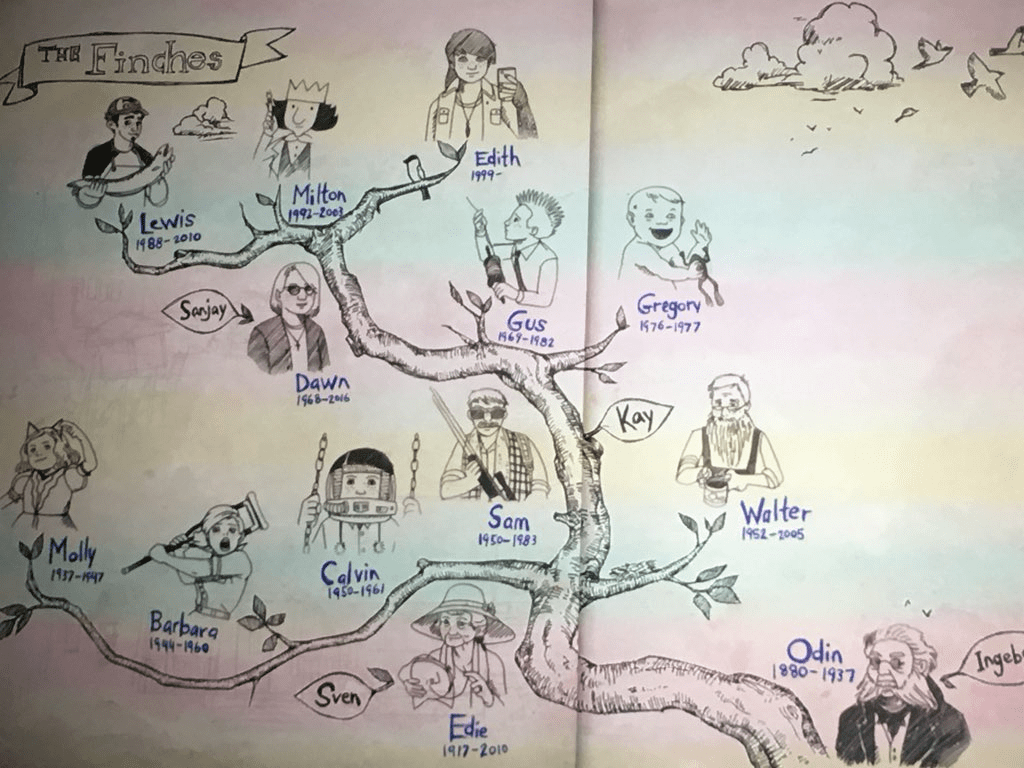
The family tree is extensive and overwhelming at first, but luckily, each Finch has their own special interest that informs their personality, making them a bit easier to remember. The writing of this game is so layered; the characters seem like caricatures: “the artist,” “the astronaut,” “the actress” etc., but upon closer inspection, it is clear that being exceptional in these roles, being incredible talents whose lives were taken too soon, being stars that shown so bright only to be eclipsed by the curse, is all a part of the family narrative. It all begins with Edie Finch. Edie is Edith’s great grandmother and the family matriarch. Edie’s father, Odin, attempted to bring their old ancestral home overseas to America. Unfortunately, the house did not make it, and you can actually see its carcass on the horizon. Their past remains in view, a monument carried with them to their new lives. Edie’s first order of business before building the new home was to make a graveyard on the property. Both of these choices illustrate how death informs the lives of the Finches. Edie had five children with Sven: Molly, Barbara, Calvin, Sam, and Walter. (Sven is of no real importance because he is not a Finch – you can see by the diagram how unimportant the non-Finches are, leaves without the faces, mere vessels to create more Finches).
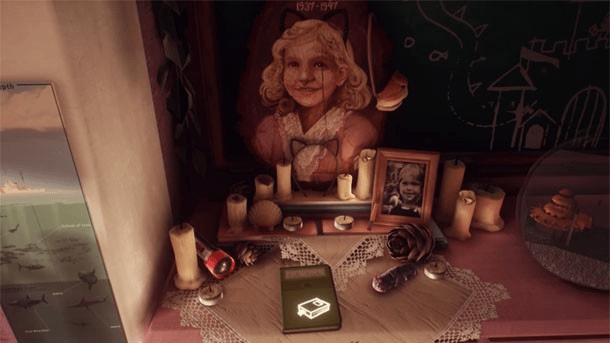
Molly dies at ten after ingesting some poisonous berries, the first born of Edie is “stolen.” Molly’s death jump-starts the curse, justifying the rest of the deaths as being under its purview. She actually died because she was sent to bed without dinner, and after pleading with her mother to no avail, scavenged around her room. Her death, like many others, was preventable, but it’s an easier pill to swallow for Edie to brush it off as a curse rather than her own negligence. It is also shrouded in this childlike dream sequence as if to imply her imagination killed her. Barbara is killed in the family home by an intruder, likely her boyfriend, who was never found. Her death is transformed into a spectacle, a horror movie (they literally use the Halloween music) because she was an actress. Edie keeps this grotesque comic that commodifies Barbara’s death, and it’s clear that even though Barbara’s death was a tragedy, the expectations of her to be an actress were weighing on her heavily, and Edie reveled in the notoriety she got from the murder. Calvin launches himself off of a cliff, swinging and “reaching for the stars”. He’s envisioned as this dreamy astronaut type – in reality, Calvin was a kid not being supervised. Kids think that they are invincible. Calvin and Sam are twins and their room is split down the middle. After Calvin died, his side of the room was preserved, forcing Sam to look at an exhibit of his dead twin’s life for his entire adolescence. Sam is Edith’s grandfather – he was killed by being impaled a deer on a hunting trip. Sam’s death was also a preventable accident, but what’s notable is that it was caught on camera. He’s yet another Finch whose death becomes a scene to reference the curse. Walter was a shut-in that lived in the bomb shelter under the house. He lives decades sustaining himself on cans of peaches, paranoia, and broken dreams. When he finally leaves the home, he is hit by a train. Living in fear of the curse, his death serves as a cautionary tale for the rest of the family that they are unable to escape fate, but really, he was just standing on train tracks. He never lived in the first place.
Sam’s children, Gus and Gregory, die of childhood neglect. Edith’s brother, Lewis, has undiagnosed, untreated depression, and her other brother, Milton, goes missing. Lewis’s sequence was really upsetting to me; his sadness and escapism romanticized as daydreamer creativity when he needed someone to step in and help him. Edith’s mother, Dawn, who left the curse behind her and cut herself off from Edie, dies of a sickness. Edie, interestingly, dies of old age, untouched by the curse. Joseph Anderson’s video essay, “The Villain of Edith Finch,” delves into Edie as the villain of the story, a woman whose unwavering belief in her family’s inevitable demise led to their deaths.
I enjoyed What Remains of Edith Finch. In 2023, I was coping with the sudden loss of my uncle. He passed away of a heart attack or stroke – when you’re in your seventies and die from natural causes, they don’t perform autopsies, they kind of just guess what ended up doing you in. My grandparents died in 2009 in a similar way, very suddenly, both heart-related. Of course they lived full, wonderful lives, but they left behind this aura of secrecy because they didn’t ask for help and died on their own terms. I am not saying that dying a slow death in the hospital is preferable, by any means. But the kind of trauma I’ve dealt with has left me waiting for the other shoe to drop. They hid things about their lives I’d never discuss publicly, but I’ll say they knew their health was declining but sealed medical records and other important paperwork and pushed people away. I love them. I miss them so dearly. The pain you feel is insurmountable when you get that unexpected phone call and learn someone died because they refused help, refused to take their medication, refused to go to the hospital, and refused to take preventative measures that may have extended your time with them.
Like Edie, my grandmother claimed to see ghosts and to have this mystical knowing. I wish I had it, then maybe I’d be able to know when something bad was going to happen. I saw this pattern emerging, where my family was dying suddenly and alone without closure. Their heart problems lingered but were not treated. When I played Edith Finch, it hit close to home; I thought, I could acquiesce to my fate, where I’m destined to die alone of some heart attack and refuse the help of others, or I could break that cycle and plead for living family to do the same. I could be proactive about my health and have open conversations about what is going on with me as to not one day traumatize my children. We don’t need to accept these doomed narratives like the Finches did. I am not sure if Edie Finch is a villain, as much as she’s a person powered by her own delusions – her delusions kept her safe and insulated from her trauma, just as my family’s secrecy shielded them from the great unknown darkness. They gave her a magical reality where her loved ones were targeted because they were exceptional, special people. But there’s no curse, no magic, just human beings, and the decisions we live with.
The Final Room
I played two powerful pieces that are definitely not horror titles, but share a common theme of coping with death. Their tone is certainly more optimistic than the others I’ve discussed today. These two games are Gris and Spiritfarer.
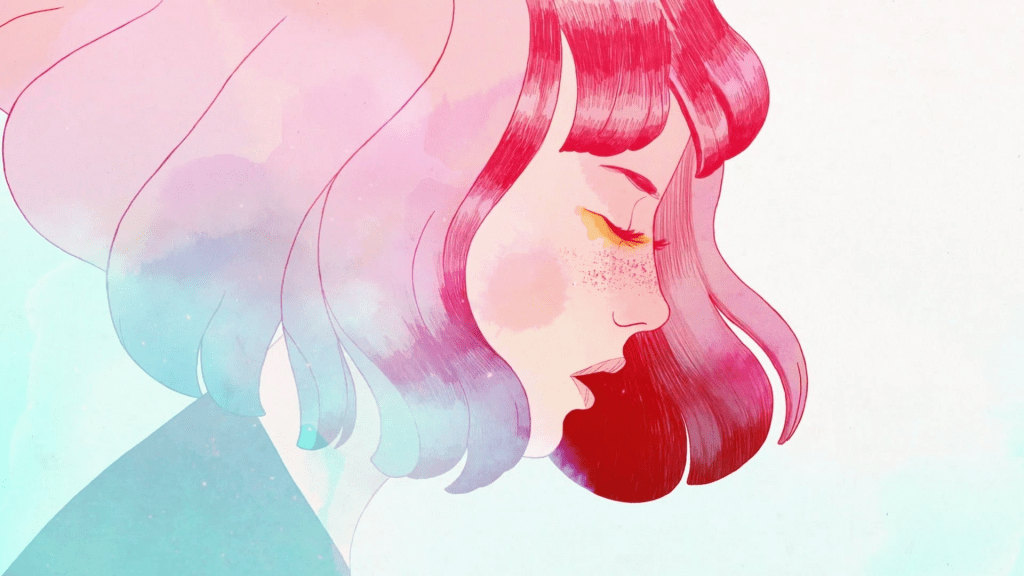
Gris is a beautiful, watercolor platformer that begins with a girl named Gris, falling out of the hands of a crumbling statue into a colorless world below. She hits the ground hard; it shatters her, ruins her, and takes away her voice. Her first movements are slouchy and slow, but she gains the stamina to walk normally, then run and jump. The levels in Gris each have different colors that represent the stages of grief and the powers that Gris regains throughout her pilgrimage (denial is grey, anger is red, bargaining is green, depression is blue, and acceptance is yellow). As you work your way through the world, swimming, gliding, and illuminating the deepest oceans and brightest constellations, Gris is mending herself, growing in vitality, and filling her life with all of the colors that washed away.
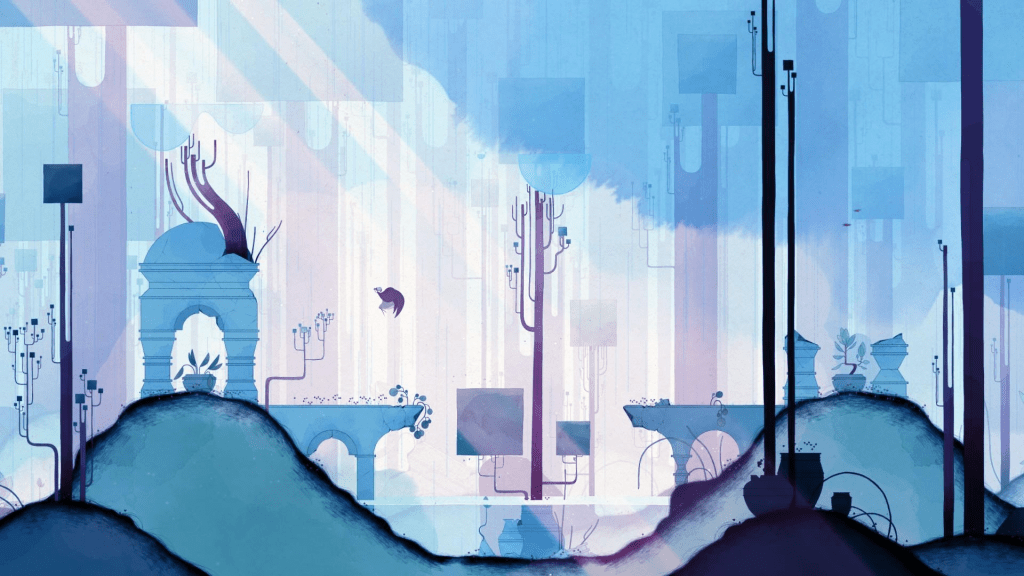
Gris is a short game without dialogue, but where it lacks in written storytelling, it makes up in ambiance, artistry, and emotion. The journey of her grief is so potent, so universal, and so powerful, that words are not needed for it to be heard. It becomes clear as the game progresses that the person that Gris is grieving is her mother. Her mother is a larger than life statue in her world, and when she dies, her world crumbles into nothing. As she gains strength, she is able to accept the loss of her mother. Her mother’s song still lives on through her, giving her the closure and peace necessary to find her voice again and continue her own song, knowing her mother is still with her, and the love they shared is everlasting.
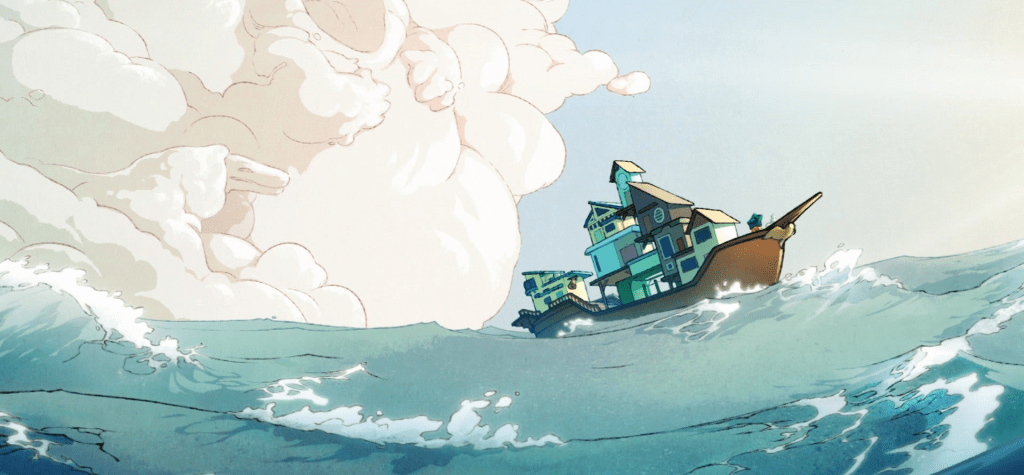
Spiritfarer is another beautiful game about death. Like Gris, the game has an illustrative design. It is also a warm and comforting experience. It’s a platformer, but mostly, it’s a cozy management game with farming, cooking, weaving, the works – you’re playing as a girl named Stella who is taking the spirits of the dead on a voyage to pass on peacefully.
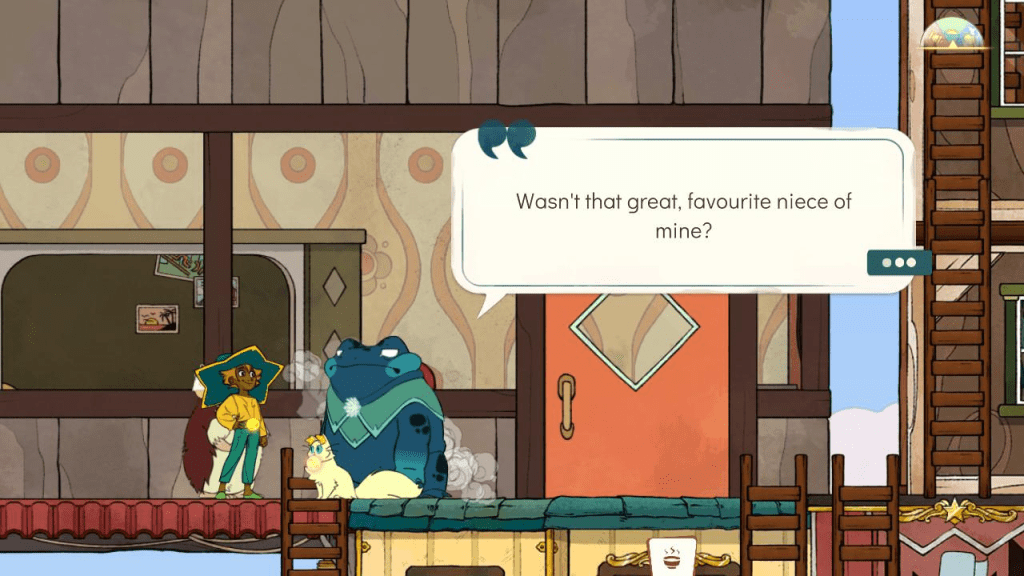
All of the spirits on the boat have uniquely depressing tales. One of the hardest spirits for me to help was Uncle Atul – the first time Stella hugged him, he says she’s his favorite niece and that shattered me in two. Atul also disappears, leaving Stella to wonder what happened to him. His death is sudden. One day, he’s just gone.
Before playing this game, I thought it would be similar to Cozy Grove, another cozy farm simulator game that I played where a “spirit scout” helps souls pass on. I couldn’t be more wrong. They share similarities of genre and have cute animal creatures, but overall, I think Spiritfarer is the better game about death. It has a lot to say about grief while Cozy Grove is a farming sim with a morbid twist that is limited in its storytelling. Part of this difference is due to Spiritfarer’s framing device – the world we’re playing is a kind of purgatory, and the further we go, the more we learn about who Stella is.
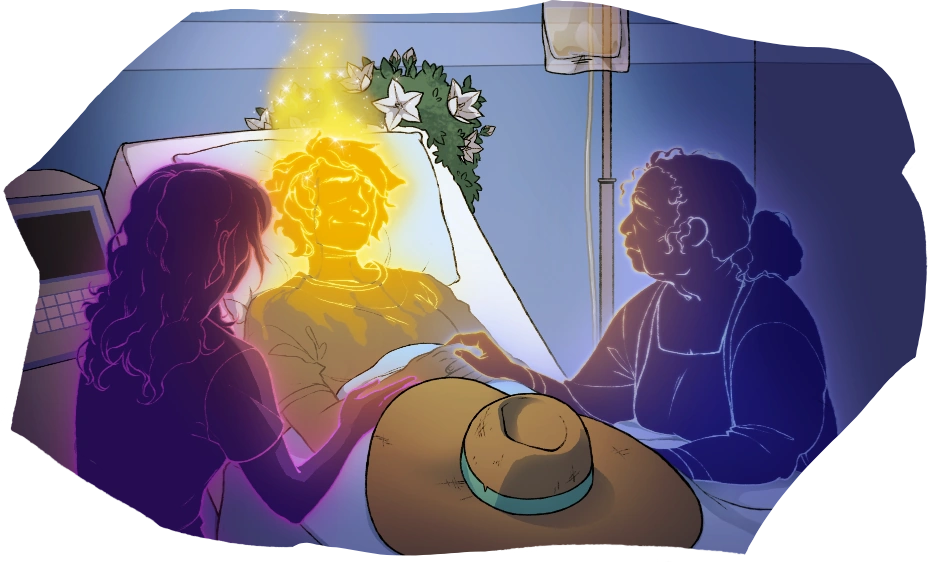
Stella is a nurse in a hospital who is dying. The game can be seen as her dying thoughts, making peace with those that have passed before her, whether they were family or the people who she treated in the hospital. The spiritfarer isn’t a grim reaper character helping people pass on as it is originally thought to be, but a person’s journey as they are faring the spirit world and accepting their own death. The other spirits do not need Stella’s help. She needs theirs. There were times during this game that I was sobbing, completely shocked and enamored with its simple, hard-hitting melancholy. The sequences with Stella’s sister Lily were especially heart-wrenching for me, as I’m really close with my sister. The game ends with Stella going through the Everdoor and passing on alongside her beloved cat, Daffodil. You truly feel how fragile and precious life is, and how the afterlife is guided by love.
That twist made the journey much more meaningful for me. The management tasks in Spiritfarer are just that – busy work tasks that prolong the inevitable. These hallmarks of the cozy genre may feel like pointless and arbitrary distractions because they are pointless and arbitrary. In many ways, this genre has garnered so much popularity because it’s a romantic, peaceful version of a simple life where you can make your own food and own the roof over your head. That reality was once within grasp but is now denied to most people who now find comfort in living through a digital world. Stella is doing these mundane tasks to bide that time before accepting what is real just like we all do.
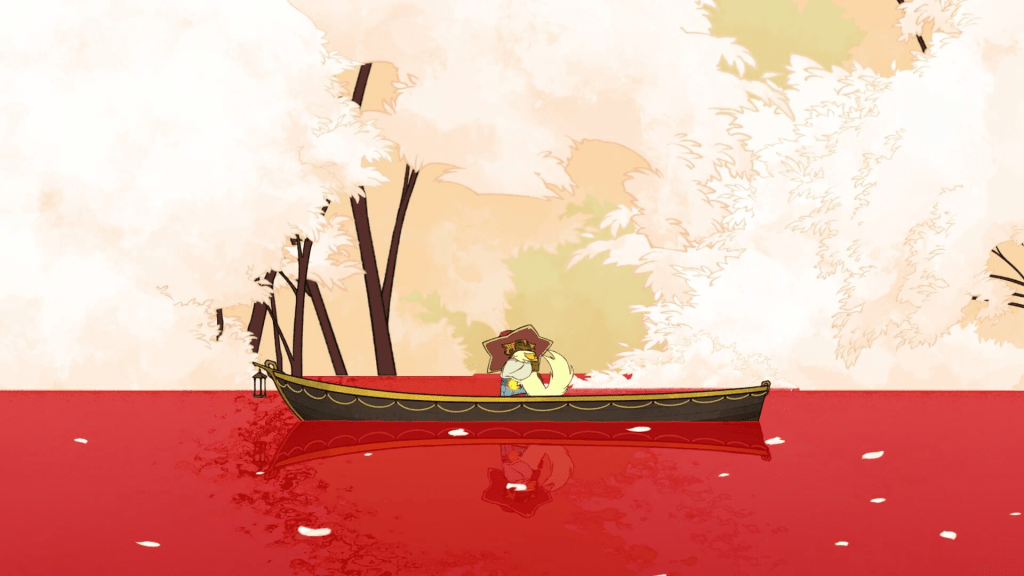
I was not mentally well during my playthrough of this game. Why didn’t I pick up the phone? What did I want to take from the house before it was cleaned out? When someone passes on, all of their objects are left behind. Their clothes, candles, art, eccentric trinkets, books, mugs, collectibles are now mementos of their life. How do we distill them in a way that is meaningful? What do we keep and what do we throw away? I’m working in an auction house now, and I am thinking a lot about what is left behind when a person dies – one day you might just be a room full of things to sell or donate. You become as valuable as the weight of your silver. How do you summarize an entire person when their obituary has a limit and you’re being charged per word? How do we cope with someone being there and then just…not being there…someone that you’ve known you entire life who was always there? I wish I could tell you I got any closer to understanding.
In 2023, I experienced deep loss. I lost my uncle. I lost my childhood cat. I needed to harness inner strength to keep going. It was a year of goodbyes, where I closed doors on relationships that I did not feel valued in. I left a job that was draining me. I sold my first car because it was falling apart. It was a year of grieving for the past, for the dead, for the broken, and for what could have been, but it was also a year of healing, of finding, and of persevering. I look back on 2023, and see how fascinated – no – obsessed I was with death. Almost every single piece of media I was drawn to explored what it meant to be alive, how to cope with the trauma of loss, and the narratives we form about tragedy. But this journey isn’t over. There’s so much more.
I see myself leaving the house of horrors. I leave behind the dark hallways and winding corridors for fresh air and a cool breeze. The daylight is starting to peek out over the horizon. Soon it will cover everything, coating the tallest tree and the smallest blade of grass in its glow. I close the door behind me. 2024 is here.
The Backrooms
I’d like to give some honorable mentions to the other horror or death-adjacent media that I consumed this year, some hot takes and recommendations I couldn’t fit anywhere else, and a much needed emotional break for the reader. This is not an extensive list:
- I rewatchedThe Babadook and formed many parallels to Omori. Their house is haunted by a monster that represents the death of the father/husband. There’s dreamlike sequences and reality is hazy. The Babadook’s design is plucked from a simple men’s hat & coat in a basement that became a living embodiment of the family’s grief that stalked them relentlessly. The only way to defeat the Babadook is to confront trauma. Unlike the Something that is relatively tame, the Babadook is a relentless, violent, blood-curdling figure. Both of them take the grieved to dark places in their psyches, pushing them to their absolute limits. Of course, he’s also a gay icon.
- Bodies Bodies Bodies was a fun subversion of the horror genre – the killer was truly the friends we made along the way. If you’re looking for something kind of trashy, funny, and gratuitously sexy, this one is a contender. A lot of folks might find this one a bit trite because it’s about a bunch of shallow 20-somethings seeing the absolute worst in one another, but what can I say? I live for the drama.
- Five Night’s at Freddy’s and M3GAN were both cheesy, campy romps. I’ll say, I understand the hate for these two – they are bonkers, but not quite pushing the envelope as far as they could be. I’m looking for these sequels to fly off the rails, but I also like things that are bad.
- Ready or Not – you love to see a rich man losing. I am a big fan of horror comedy, if you can’t tell already.
- Scream VI – I didn’t dislike this movie, but the longer I sit with it, the longer I feel like they’re losing the plot in terms of the core mechanics of the franchise being a meta-commentary on film. I would like to see another Scream movie sometime in the future that takes the piss out of multi-verses or something equally uninspired.
- I watched a lot true crime documentaries this year. I don’t want to be one of those true crime weirdos, so I will give you my core tenants: 1) Is not a makeup YouTube tutorial 2) Has close family/friend interviews where the subject matter is treated with respect and care 3) Not sensationalized 4) Criticizes law enforcement in some way 5) Awareness of social structures, bigotry and stigmas 6) Approached with extensive research 7) Focus on the victim’s life, community, and story. All that being said (sorry it needs to be), I liked Paradise Lost and Dark Side of the Ring.
- Nexpo’s videos on PETSCOP, Super Eye Patch Wolf’s video on Fear & Hunger, Jacob Gellar’s Three Specific Kinds of Terror – really interesting essays on horror games, none of which I have played, but I enjoyed nonetheless. I feel like I should also shout-out Sagan Hawkes, who makes a lot of cool horror content and helped me brush up on FNAF lore.
- Speaking of YouTube: This Omori animation.
At the time of writing, here are some things that I am currently looking at with my eye balls:
- Mind Hunter
- House of Leaves
- Twin Peaks
- Life is Strange


Leave a Reply