I think we all can somewhat fondly remember the bitter sweet Animal Crossing: New Horizons craze at the beginning of COVID-19. For the uninitiated, it was March of 2020, and millions of people sank hundreds of hours into terraforming their islands, customizing their wardrobes and furniture, and using Nook Miles tickets to get their favorite villagers in order to achieve their visionary goals. The game brought so many people together before we could even wrap our heads around the quiet comprehending of the ending of it all, and people were even going as far as buying Nintendo Switch consoles to play this singular game. A lot of players were spending real money on items, bells, and villagers, all in an effort to join this zeitgeist that was distracting us all from our then naïve notions of quarantine living. A black market formed online that basically broke the value of in-game currency, Elijah Wood was going to a random Twitter user’s island for their turnip prices, and the entire internet was obsessed with this cat named Raymond…it was, quite the experience, to say the least.

A lifestyle movement that rose to prominence during the pandemic was cottagecore, an aesthetic popularized by idealized rural life and activities such as baking, knitting, gardening, and more. In her article, “What Exactly Is Cottagecore and How Did It Get So Popular?” Kate Reggev writes:
Cottagecore began to fill people’s social media feeds on Instagram, TikTok, Tumblr (yes, that’s still a big community!), and beyond; the New York Times even published a piece in March of this year about cottagecore, calling it ‘a budding aesthetic movement.’ Enter the pandemic, and it went from “budding” to blooming to full-on booming. ‘With ample time on our hands when the pandemic hit and quarantine became commonplace across the globe, we turned to finding fulfillment and purpose outside of our monetary potential—and cottagecore was the perfect vehicle,’ explains Noemie. And suddenly, with so much time at home, it seemed like everyone was baking focaccia laced with herbs and colorful vegetables, planning summer gardens in their backyard, and engaging in grandma-inspired craft projects like knitting and embroidery.
Architectural Digest
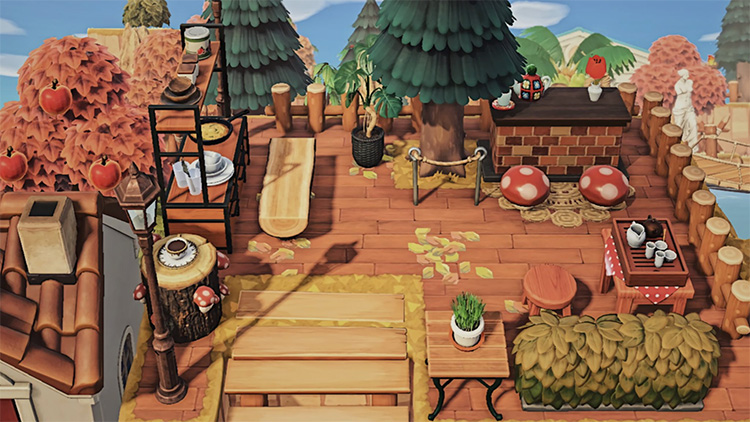
The link between cottagecore and video games became exponentially apparent with Animal Crossing: New Horizons, where countless YouTube channels began to spring up doing island tours; one of these channels, called tinylibrarys, was uploading cottagecore content consistently, as well as showcasing some of the more niche sub-movements therein, like goblincore, farmcore, swampcore, fairycore, etc. within the game. Mushrooms, cedar trees, books, tiny libraries, flowers, mismatched bushes and shrubs, cobblestone roads, dirt paths, rustic furniture, and autumnal theming dominated this aesthetic. All of these videos illustrate the amount of time and creativity that went into crafting, decorating, and terraforming these islands. The cottagecore aesthetic also rose to popularity within the LGBTQ+ community as a way to achieve comfort and acceptance outside of societal roles in a world that often denies that lifestyle to them (Rowan Ellis has an excellent video on that, which I will link here). For all intents and purposes, cottagecore became a movement yearning for a simpler, safer life. The warmth of a blanket and a piping hot cup of tea, the sweet smell of apples and cinnamon as a pie baked in the oven, and the feeling of a book in your hands as you sit by your window on a rainy day. An idealized view of quarantine life, being tucked away in a small cottage in the woods surrounded by greenery.
Life Simulation Games, New Horizons and COVID-19
I am not the first person to notice or discuss the rise of life simulation games during the pandemic, or the popularity of video games in general as a hobby in the last year and a half. When looking for indoor activities that promoted some escapism into fantastical worlds, it is no surprise that gaming became the primary media outlet for many of us, myself included. It is interesting, however, that many collectively became attracted to games that promoted a particular kind of wish fulfillment that you see in cottagecore; games like Animal Crossing: New Horizons, Stardew Valley, and Cozy Grove, amongst others, that gave us a world outside of the confines of late stage capitalism and disease, where we could return to the simplicity of living off of the land. The cottagecore aesthetic values were baked into the concepts of these games, as they gave us a simulation of the life we’d wish to lead. To take it a step further, the games gave us a place where we could make friends easily in adulthood or digitally feign friendships with characters and empathize with their stories. We could have a house without the terrifying concepts of inescapable debt, student loans, insurance companies, and interest rates. Tom Nook giving you a home and infinite time to pay it off without any interest when money is easily obtained by selling fish and sea shells is not exactly the same thing as begging your government for stimulus checks, universal healthcare, and unemployment, but I suppose people get confused about that. And if that’s too on the nose for you, in Stardew Valley, you have a skeleton co-worker before you quit your evil corporate day job to farm on your inherited land.
I asked some friends to discuss their relationships with life-sims during the pandemic, and here are some responses. For some people, ACNH gave them a means to celebrate their achievements that were otherwise thwarted by COVID:
My younger brother always struggled in school because of hearing/learning impairments. When his college graduation ceremony was cancelled, he was crushed. I never actually played Animal Crossing until the pandemic. I only managed to get a few friends together on a stream for him but they all brought cool lights and signs and their avatars offered him congratulations. He was really surprised and talked about it for weeks.
It helped combat anxiety and depression:
Animal Crossing filled a very dark time in my life with an opportunity to be creative and allowed me to feel close to my friends despite the distance. I enjoyed the months I was able to play with my sister and my friends.
It was a welcomed distraction from the world around them, as well as a source of positive representation:
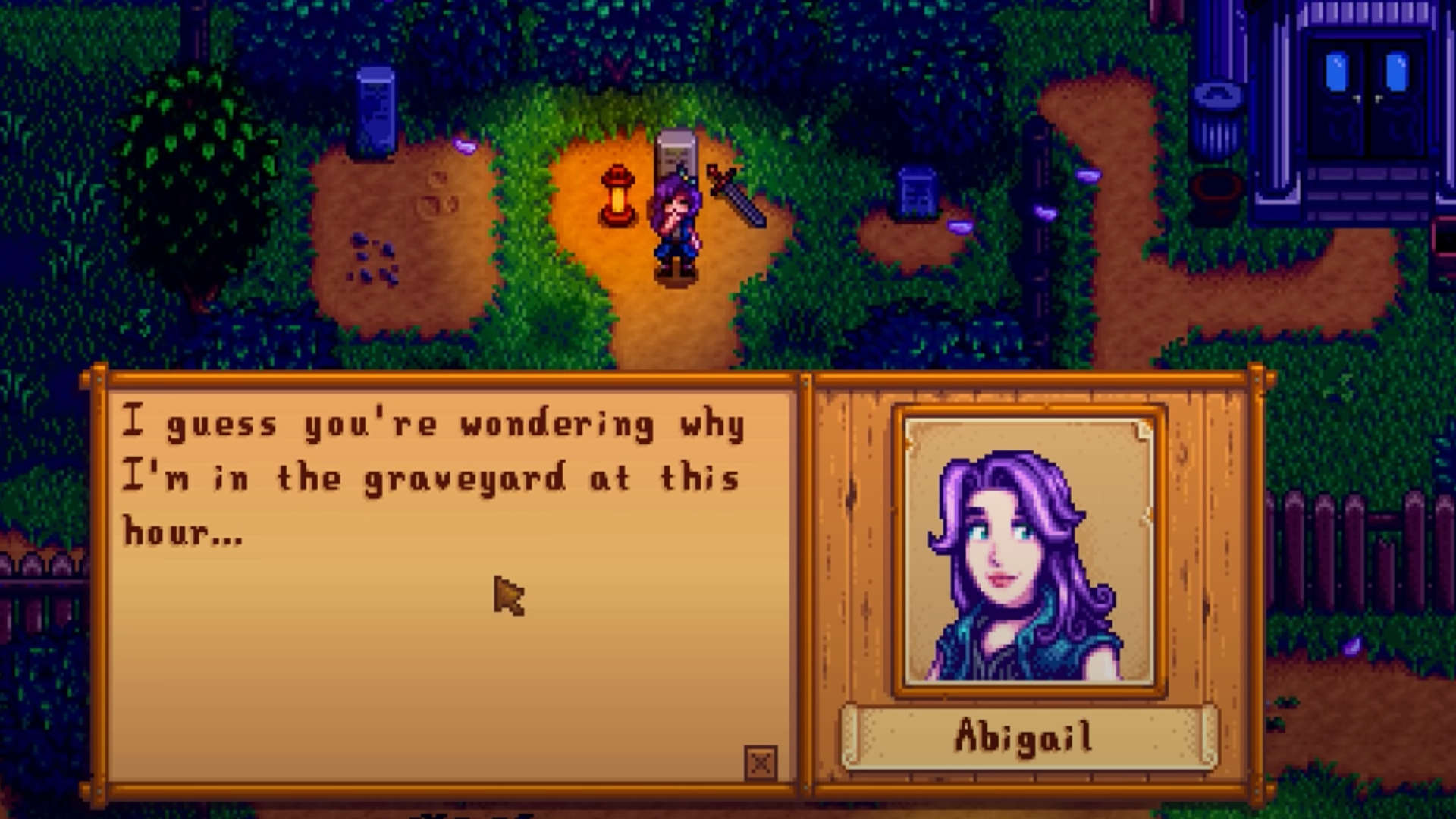
Just as lockdown hit, I was laid off from my job. I suddenly had hours upon hours with absolutely nothing to do—nothing but to think, and to worry, and to internalize all the horrors around me. With Animal Crossing, Stardew, and even Breath of the Wild, I was given an escape from right within my home. I could waste my time becoming BFFs with Brocollo, living out my disaster bi dreams by fighting monsters and marrying Abigail, and climbing mountains just to watch the sunset over a rolling countryside. Even though I was stuck inside, I felt like I was living a fuller life than I ever had before quarantine. Playing those games was more than just a momentary distraction—it was a balm when I needed it most.
Animal Crossing: New Horizons quickly became part of my daily routine during the start of pandemic shutdowns as it allowed me to be creative and have fun in the safety of my own home. I was unable to see my partner for almost 3 months so we met up on Animal Crossing for safe visits and it was truly a godsend. 18 months later I found a game called Cozy Grove after having knee reconstruction surgery and it is now part of my daily routine. It’s so fun and wholesome! There’s also a character in a power chair and that was the best surprise I could’ve asked for in a game; someone who represents what I look like. Gaming has been a positive and productive outlet for me for years but during the pandemic it has been a reason to get out of bed, a reason to stay positive, and a way to feel better.
Some grew up with Animal Crossing and saw the culture surrounding it change during the pandemic:
I played all handheld versions of Animal Crossing from Wild World to New Horizons. It was always a bit of peace in a hectic world. I play it slow and steady and get things at a leisurely pace. New Horizons was the reason I bought a Switch. I was not prepared for the perfect storm that New Horizons and COVID would create. This game that was my peace that I mostly played alone was suddenly something else. I saw competitive Animal Crossing players, time jumpers, and friends messaging me whenever they saw me on. It was like driving steady down a quiet back road and then turning onto a highway with a hundred cars honking. I did have fun showing people my town and being amazed at the creative talents of my friends. I still go on New Horizons every day even though it has long past from the minds of my friends. Looking back it’s a nice memory from a rough time and I remember the moment where everyone played Animal Crossing fondly.
My friend Wyatt also wrote an amazing article about his experience with gaming and COVID-19 back in April, where he talks about the importance of community at the forefront:
Gaming got me through the last year. It was my escapist hobby of choice when asthma trapped me inside as a child, and it saved me again when I was 35, trapped inside due to a virus. I feel so incredibly fortunate that I was able to get through 2020 and still keep my health, my job, and a good amount of sanity. I was able to visit other worlds as the hero of my own story, spending nights connecting to friends I was a disconnected from and chatting about life as we stomped zombies.
It also felt a bit hollow. There’s something to be said for games being great escapism, but that escapism is best shared with others. That’s always been the magic of both gaming conventions and sports arenas: thousands of people gathered to enjoy the same thing. To collectively know without a doubt you aren’t alone in what you enjoy. For most of us, COVID took that away. Yes, we had the internet to connect us, but day after day of screens both for work and hobby can blur together.
Sprites and Dice

For my own part, gaming during the pandemic was my primary source of happiness, especially after I finished my master’s degree and had more free time for existential crises. I replayed the first Kingdom Hearts for the billionth time, fell in love with Ōkami, and used Pokémon Go as my excuse to go outside for some fresh air. Like many others, I loved Animal Crossing and the freedom it gave me, but I also experienced burnout; I put hundreds of hours into my island, and haven’t really touched the game since January 2021. New Horizons allowed me to “see” my friends safely and communicate with them over chat when they visited my island, putting a bandage on the loneliness I was experiencing from lack of socialization. It also gave me a creative outlet to decorate the interior of a house whilst living in a two bedroom apartment. I got really excited for the autumn events and made my island super witchy.
The online community for Animal Crossing is too large and expansive to whittle down into critics or fans. I find myself looking at the game as both; I loved it, and I still love how it made me feel. However, over time, the issues with the game became more glaringly apparent; the updates were lackluster, the villagers were shallow husks with repeated dialogue, and the active community that I was a part of was disintegrating, group chats left unread or unopened. People were moving on to other things, and they began to see the flaws more clearly. If you are still playing the game, this isn’t a slight towards you. I am sure that for a lot of people, regardless of its flaws, this game will always hold a special place for them, and I would never want to take that away from anyone. And to be fair, many of these problems could be written off as the developers not having a crystal ball. The game, regardless of its time travel capabilities, does not encourage the style of play that people were doing during the early onset of the pandemic. I also doubt that anyone at Nintendo could have predicted that we’d all have hundreds of hours of free time to fly through the game at home at lightspeed. Some of the issues, however, are foundational and fundamental to the design. It is not too much of a stretch of the imagination to look at the villagers as glorified gacha prizes to-be. People were collecting them based on their rarity and how they looked, and were willing to pay real currency to either buy them on Nookazon, or purchase Amiibo cards. By having their personalities be so uniform and uncontroversial, it enables people to collect whichever villager they want without the fear of missing out.
Cozy Grove: A Life-Sim Dedicated to Preventing Burnout
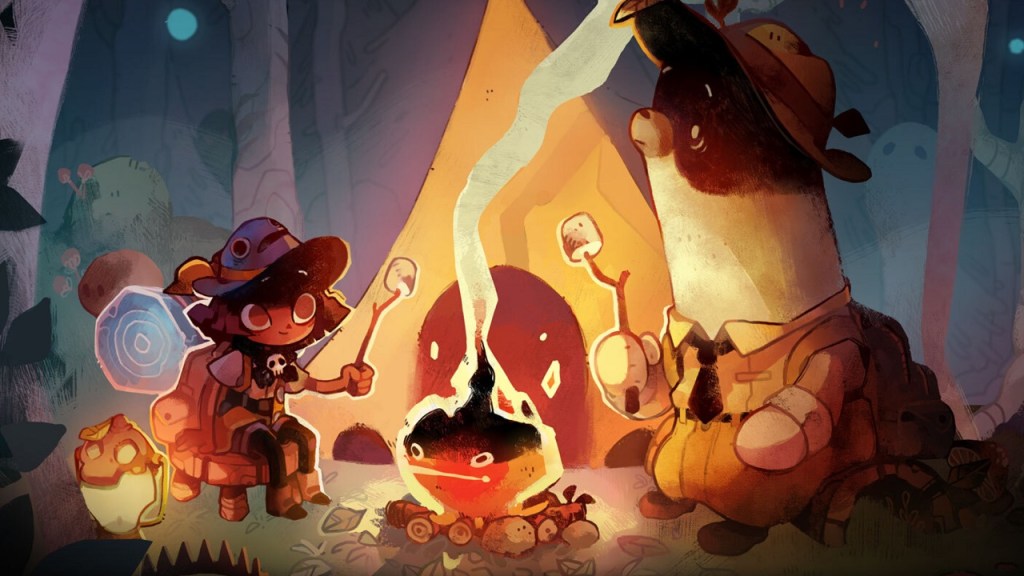
While looking for another game to scratch the life-sims itch, I stumbled onto Cozy Grove, where you play as a “spirit-scout” camping on a haunted island. The island’s inhabitants are the ghosts of various adorable cartoon bears, all with distinct personalities, occupations, and stories. The goal of the player is to gather items, craft, fish, farm, take care of animals, and decorate, all while learning about these bears’ lives before they died, ultimately bringing them the closure and peace of mind to let go and pass on. As you complete story quests, you toss spirit logs to your friendly neighborhood campfire, Flamey, who can expand the island and shepherd the lost souls of these bears to appear. The island is drained of most of its color and it is your job to imbue the land with life and light.
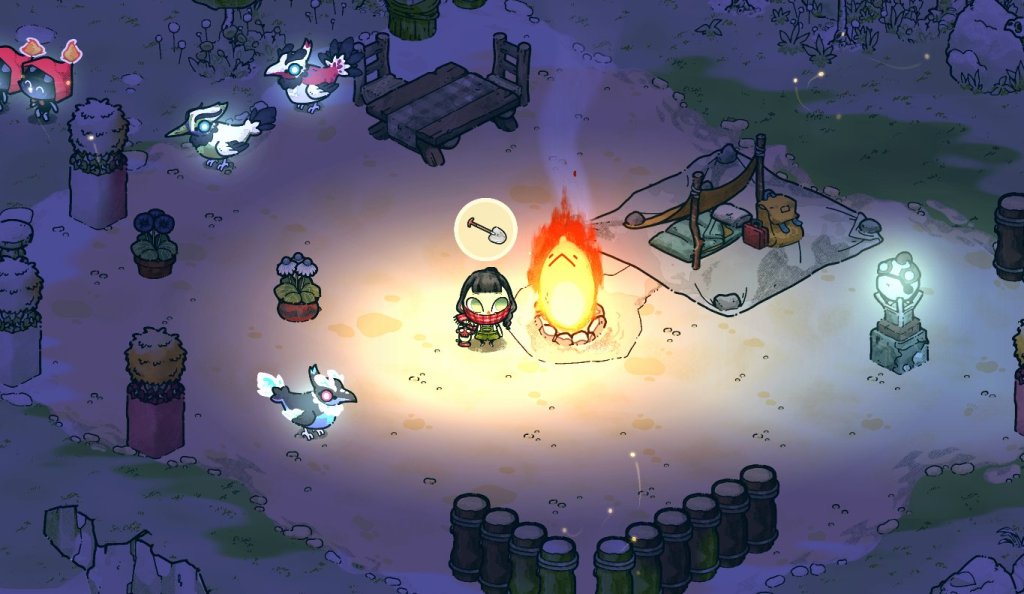
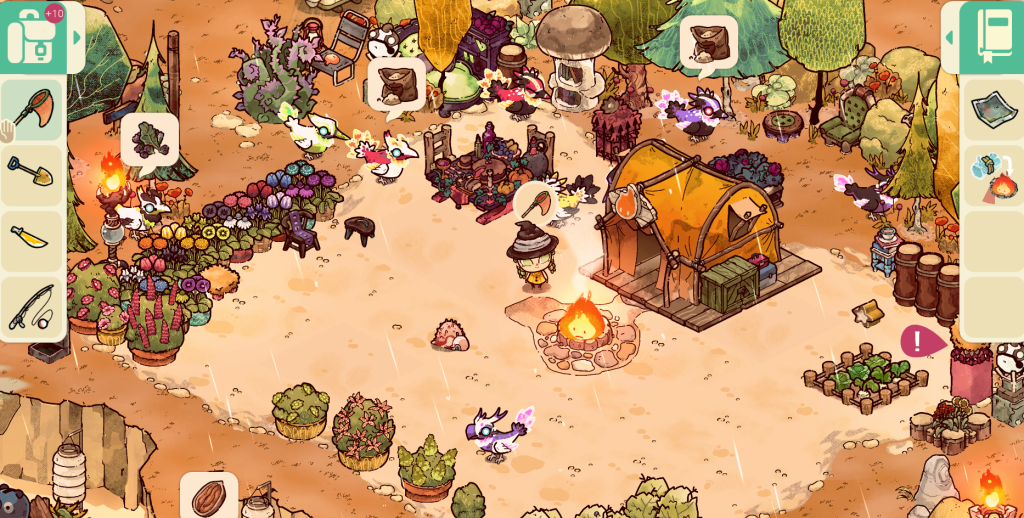
There are various mechanics within the game that make it comparable to Animal Crossing. I was originally inspired to buy it because of the spooky concept and painterly art style, but what’s kept me coming back is its heart, wholesome story, peaceful soundtrack, and consistency. There are a limited number of resources that you can harvest per day, a limited number of quests that you can do for the bears, and a limited number of spirit logs that you can give Flamey before he instructs you to come back tomorrow. Now, I’m sure some of you will argue that ACNH does have limitations that are set in place, as well as seasonal restrictions, but unlike in ACNH where the worst thing that will happen to you if you time travel backwards is that your turnips will die, Spry Fox, the developer of Cozy Grove, has urged players to not time travel backwards because their game could become corrupted and unplayable. The game is literally not designed to be skipped around in, whereas I believe Nintendo acquiesces to time travel as an inevitability. While you can argue that some of these issues lie within play style and not the game itself, it is clear that Spry Fox took these components into consideration when programming the game to be daily-task orientated. Nicole Carpenter writes
And Cozy Grove has something that New Horizons does not — a very clear structure. Players pick up daily tasks from the spirits around the island, each of which has a clear end goal. These quests are different each day, and they all contribute to building relationships with the spirits around the island. Cozy Grove is the perfect game for anyone that’s ever gotten stressed out by Animal Crossing, because my goals don’t feel overwhelming or endless, a clear contrast from how I felt a few months into New Horizons.
Polygon
I believe that the developers of Cozy Grove learned from ACNH‘s intense burnout culture online. The game, more than any other that I have ever seen, wants you to take your time. Patrick Klepek talks about how Cozy Grove combines the chill vibe and aesthetic of an AC game, all whilst having more structure and daily tasks to come back to:
I’ve tried, over and over, to get into Animal Crossing, only to find myself dismayed at the busywork, and equally uninterested in customizing a house. And that’s fine, because that’s what Animal Crossing is, and I’ve come to accept it’s not for me. All good. And yet, time and time again, I find myself drawn to the Animal Crossing‘s chill vibes and wishing them into another context.
Vice
The game encourages you to log off, and only wants to be a part of your day for a brief amount of time. Klepek also brings up this idea of the paradox of choice; for many people, the freedom to do whatever they want without a structure or narrative can be overwhelming. There were tons of memes floating around about people having mental breakdowns after terraforming their island in New Horizons; it’s a valid point that the opportunity to mold your space into whatever you want without limitations can be paralyzing, although it seems counterintuitive. He also mentions another game in the article, A Short Hike, which is a bite-sized exploration game about progress and growth that I absolutely loved and I would be remiss to overlook.
Concluding Thoughts
Cozy Grove‘s ethos stands in the face of a widely circulated pandemic talking point: this idea that because we are learning or working remotely, we should be using our extra time to be productive. Did you know Shakespeare wrote King Lear while quarantined? If I have to hear that one more time, I might scream! Now, I would never go as far to say that any life-sim romanticizes hustle culture because that would be ridiculous and untrue, but I do think that Cozy Grove excels in telling players that enough is enough, and it is okay to complete their tasks without overexerting themselves for the day. Along with the game’s lack of online market place, there is no need to capitalize on the success or progress you made in the real world. I personally knew people who were trying to make money through New Horizons. Millennials, especially, have this inherent obsession with monetizing ourselves, creating a personal brand to market to an audience, and turning everything into a side hustle. I’m not saying that it is bad to make money from your hobbies—just that it shouldn’t be the expectation, and that expectation is a stressful internalization of capitalism—there’s a need to prove ourselves as being worthy of existence, and that worth derives from how much work we do and how much money we’re making. You can imagine how damaging this outlook was for people when they were stuck indoors. These games remove so much of the stress of daily life by making money a non-issue, and by making the tasks self-fulfilling. There’s something powerful about the notion of doing something creative for yourself—to build something, paint something, write something, or expand your horizons for your own benefit, and not for the benefit of corporations or capital. To many, this ideal is a privilege, but it shouldn’t be out of reach, and the reason it is necessitates the need for something as sci-fi apocalyptic sounding as “life simulation” existing in the first place. There’s a reason that we are gravitated towards these fictional worlds where we can escape into lush forests untouched by climate change.
Even while some of us are vaccinated and have grasped onto some sense of normalcy, there is still a variant, and this virus is not disappearing anytime soon. The traumas and hardships we all faced during this past year and a half are extensive and would encompass an entirely different kind of essay. I can say with certainty that if you used video games as a coping mechanism, you’re not alone. The memories and moments that we have formed through digital landscapes, whether through our own choosing or not, will carry us through the rest of our lives. These games provide us with some insight on what we collectively value and want: to ease our burdens and come together as a community; Animal Crossing: New Horizons, even if it did so briefly, achieved that. As silly as it might appear to an outside observer, life-sims helped a lot of people continue to live their lives, gave them something to look forward to each day, and made them feel a sense of progress when their life was otherwise stagnant.


Leave a Reply