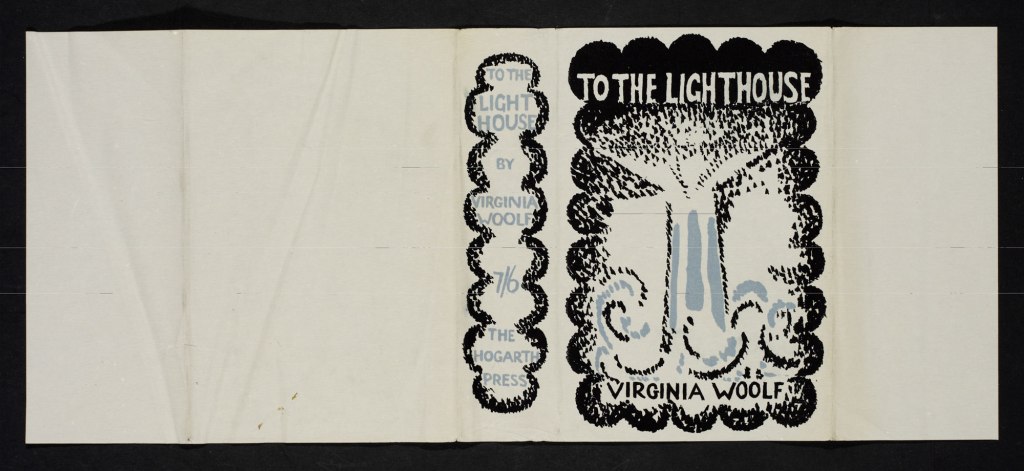
In her nonfiction argumentative essay, A Room of One’s Own, Virginia Woolf discusses the crisis of women’s authorship within a patriarchal world, critiquing this notion that masculine values should prevail within literature. She writes: “Speaking crudely, football and sport are ‘important’; the worship of fashion and the buying of clothes ‘trivial’” (73). Woolf argues that art imitates life, and women write novels differently than men because their experiences differ substantially; women’s feminine mode of writing, at least before and during her lifetime, centers itself on the private sphere rather than the public one. She calls attention to the fact that, historically, masculine values reigned supreme in fiction, and men’s writing was culturally and intellectually heralded: “This is an important book, the critic assumes, it deals with war. This is an insignificant book because it deals with the feelings of women in the drawing-room. A scene in a battlefield is more important than a scene in a shop” (73). Many of Woolf’s fictional works, as well as her other non-fiction essays and political calls to action such as Three Guineas, directly challenge this notion that novels set within a domestic space are unimportant, frivolous and bear no real impact on the daily lives of people outside of the home. In particular, her novel To The Lighthouse works to deconstruct rigid, Victorian values and the inflated significance of the public sphere by centering itself on the home, and how that home’s destruction creates a rippling effect that shakes all of society. Starting within an intimate, familial setting, and expanding to an existential scope, the novel becomes a harsh criticism of strict gender roles and the hierarchical nature of human lives and experiences under patriarchy. Woolf breaks down the boundaries between the public and private spheres within the context of time and nature as unfeeling, apathetic forces that erode social norms and institutions, thereby eroding this hierarchy between the significant public and the insignificant private. Ashes to ashes and dust to dust; all becomes insignificant within the context of the novel. The differences between a man’s world and a woman’s world are dismissed as frivolous, human constructions themselves, as they are a mere distraction from the reality that we all face–death.
To The Lighthouse is divided into three segments: “The Window,” “Time Passes,” and “The Lighthouse.” Sandwiched between the two much lengthier sections “Time Passes,” encapsulates a period of many years whereas “The Window” and “The Lighthouse,” respectively, describe the span of mere hours in vivid detail. “Time Passes” is a seemingly stark contrast from the other sections of the novel in both form and content because it is the most dense and rich within its imagery of degradation and death. However, there are elements throughout the rest of the novel that allude to the deaths of characters and the abject nihilism towards human life that Woolf presents within its middle section. Throughout the first section of the novel, “The Window,” Woolf sprinkles bits of foreshadowing to the deaths of Mrs. Ramsay and her children, but moreover, she hints at the insignificance of Victorian values while the characters are still alive.
Mr. Ramsay is fascinated with “men of genius,” a concept that Woolf was all-too-familiar with, as she described her own father to be one–a man of genius encapsulates the Victorian gentleman’s ideal of masculine triumph over science, philosophy, literature, etc. A man of genius is logical, rational, and does not concern himself with emotion, child-rearing or homemaking. In the case of Mr. Ramsay, he struggles with his own intellectual legacy that is dwarfed by his expectations of how a man of genius should act–he muses about his successes and failures within the context of all of English society and man’s achievements within it. Mr. Ramsay is fascinated by this metaphor of thoughts as being like the alphabet, and his mind being able to recite the letters: “like the alphabet is ranged in twenty-six letters all in order, then his splendid mind has no sort of difficulty in running over those letters one by one, firmly and accurately, until it had reached, say, the letter Q” (37). He has an existential conundrum over his reaching the letter Q; one the one hand, getting that far into the alphabet is an amazing feat of human genius, but on the other hand, he longs to reach the letter R, and is astounded at the idea that “one man in a generation” could actually reach Z. Reaching Z, to Mr. Ramsay, would be solidifying your intellectual prowess amongst the greatest minds in history–all of these minds, unquestionably, are the minds of men, at least in his own view. After struggling with his own possibility of failure or being forgotten, he thinks: “One in a generation. Is he to be blamed then if he is not that one? provided he had toiled honestly, given to the best of his power, and till he has no more left to give?” (38). He grapples with this revelation that he might not be a lone genius, and at least, if he is to live his life to the fullest and do his best, he cannot be blamed for failing intellectually.
Woolf delves into Mr. Ramsay’s priorities and the society in which he fostered this belief in his own legacy in order to question what value that intellectualism has. She then writes:
What, indeed, if you look from a mountain top down the long wastes of the ages? The very stone one kicks with one’s boot will outlast Shakespeare. His own little light would shine, not very brightly, for a year or two, and would then be merged in some bigger light, and that in a bigger still. (39)
There’s some cataclysmic existentialism to Mr. Ramsay’s innermost thoughts. He absolves his own role in high society, acquiescing to being part of something larger that blights his existence and makes all of his contributions insignificant. Woolf uses this image of a stone (something that is natural and terrestrial) in contrast to the works of Shakespeare. Shakespeare is often the face of the Western canon–he is a figure that looms larger than life on the arts and history, especially English history. If his achievements are meaningless and destined to fade faster than a mere stone, then what does that say about Mr. Ramsay’s? What does this passage say about “lesser” human achievements? Are human achievements even significant enough to rank? Mr. Ramsay’s priorities and concerns seem miniscule in the scope that Woolf introduces here; all is meant to fade, even the men who held power and authority in Victorian society. All that knowledge and history amounts to nothing. These sacred institutions, libraries, and universities that locked their doors to women in order to forward the prowess and achievements of men were not better for doing so; these powerful men are unable to solve the problem of death and the infallibility of memory.
Likewise, Mrs. Ramsay’s thoughts also allude to the death and decay of Victorian values: she is a grand matriarch of her house and family, and yet, upon seeing a young couple, she thinks of their love as being foolish grandeur:
[F]or what could be more serious than the love of man for woman, what more commanding, more impressive, bearing in its bosom the seeds of death; at the same time these lovers, these people entering into illusion glitter eyed, must be danced around with mockery, decorated with garlands. (102)
A man’s love for a woman, in her view, is a kind of death; there’s a death of a woman’s autonomy and independence. Much like Woolf writes about in Three Guineas, married women’s domestic duties uphold society and enable men to inhabit the public sphere, and yet, women do not get the rights or monetary compensation for their labor. Mrs. Ramsay sees young love as a kind of naivety to the contract that women are signing away their lives to be in a form of servitude. This scene takes place during a dinner party, and the lines following the quote above take another dark turn towards death: “[Mr. Bankes] had eaten attentively. It was rich; it was tender. It was perfectly cooked. How did she manage these things in the depths of the country? He asked her. She was a wonderful woman” (102). Mr. Bankes remarks upon Mrs. Ramsay’s ability to manage a home and dinner party. He thinks that she does so well, and that attribute makes her a wonderful woman–the reader can see that other characters, specifically male characters, view Mrs. Ramsay as an ideal wife, mother and homemaker. Furthermore, he is eating a tender and delicious beef dish after she was thinking about death and the illusion of marriage. In this way, Woolf alludes to this consumption of meat as a consumption of women’s labor and bodies; a man’s love for a woman is “commanding” and “impressive,” as if he is overtaking her and consuming her for his own gain. This scene, much like Mr. Ramsay’s confrontation with his intellectual legacy, shows Mrs. Ramsay to be aware of the role that she is playing and the exploitative societal repercussions of it. Both scenes indicate a death of the traditional; Woolf questions the validity of these roles and traditions, showing that all illusions of grandeur and beauty are meant to fade like the glittering eyes of newlyweds.
“Time Passes” is an exploration of grief that expands outwards to comment and critique upon social issues, focusing on themes of death, nature, and existentialism. Left deserted after the many deaths in the family, the Ramsay house is rotting beyond repair. Mrs. McNab, the woman tasked with looking after the Ramsay home, views herself as unable to restore it in its entirety due to her age and fatigue; in this way, Woolf juxtaposes a woman aging just as the house is aging over time. Like the floorboards in the house itself, she is getting weaker, unable to uphold the traditional Victorian home. Without the family to keep the house in mint condition, nature runs loose:
Nothing now withstood them; nothing said no to them. Let the wind blow; let the poppy seed itself and carnation mate with the cabbage. Let the swallow build in the drawing room, and the thistle thrust aside the tiles, and the butterfly sun itself on faded chintz of arm-chairs. Let the broken glass and the china lie out on the lawn and be tangled over with grass and wild berries. (142)
This uncanny image of a domestic space corroding in time from lack of use ultimately gives this section of the novel a feeling of existential dread and meaninglessness: “There it had stood all these years without a soul in it. The books and things were mouldy, for, what with war and help being hard to get, the house had not been cleaned” (139). The books, as well as the clothing left in the drawers to be gnawed on by moths, represent two facets of a Victorian era household: the books align themselves with the thinking and intellectual prowess of great men, and the clothing is a more domestic image that is represented as being connected to femininity, child rearing, and motherhood. These two facets are destroyed and forgotten; neither is preserved by time, and neither is more important than the other. Both stereotypically masculine and feminine creations are destined to turn to dust. These roles and symbols for human achievement never mattered to begin with, and only existed in the minds of those who valued them. Emily Clark notes that “The Ramsays and the architectural manifestation of their beliefs, dependent upon the absoluteness of gender roles with no room for variance, simply cannot survive untouched” (51). Woolf writes: “Did Nature supplement what man advanced? With equal complacence she saw his misery, his meanness, his torture” (138). Woolf’s descriptive language of death and decay harken to a meaningless in all intellectual and personal endeavors that she foreshadows in “The Window.” Not only is the ideology of the Victorians flawed and pointless, but all human impact will eventually be corroded and undone by nature’s unfeeling growth and dismissal of our existence. The only forces that keep society functioning are only powerful in memory.
With her death of the house and death of gender roles within “Time Passes,” Woolf also deconstructs the values of the public and private spheres. She highlights the insignificance of human life (or death), not only with plot and theme, but in her technical form, specifically, her use of brackets. Her characters are killed unceremoniously “off-screen.” Their deaths are bracketed and embedded inside larger chunks of text, without being given a second look or comment: “[Mr. Ramsay, stumbling along a passage one dark morning, stretched his arms out, but Mrs. Ramsay having died rather suddenly the night before, his arms, though stretched out, remained empty]” (132). For a character whose thoughts we read from her perspective in the previous section, her death seems so passive and voiceless. What did she die of suddenly? Was she scared of her death? Did she come down with an illness and was not able to find a cure? The reader is given no answer. In truth, it does not matter what she died of. We are left with a lonely, depressing image of her husband reaching to her with no avail.
Likewise, “[Prue Ramsay died that summer in some illness connected with childbirth, which indeed was a tragedy, people said, everything, they said, had promised so well]” (136). Prue’s death is more descriptive than her mother’s, but there’s still a purposeful lack of detail. She died of “some illness connected with childbirth,” but Woolf does not write which one. There are many complications that could arise during childbirth, and yet, this sentence is written as though we are hearing what people are gossiping about through the grapevine. They do not have all the information, and by proxy, neither do we. Andrew Ramsay is also killed by our bracketed grim reaper: “[A shell exploded. Twenty or thirty young men were blown up in France, among them, Andrew Ramsay, whose death, mercifully, was instantaneous]” (137). Andrew Ramsay, a soldier who dies on the battlefield, is not treated with any more significance than his sister, who died during childbirth. Both of their deaths are painted with the same brush. Both are equally unimportant, bracketed off as though they are a footnote in the erosion of the English patriarchal values their family represents.
In Emily Clark’s article, “The Walls Are Crumbling Down: Houses as Death Metaphors in Virginia Woolf’s Orlando and To the Lighthouse,” she articulates how the destruction of homes within Woolf’s novels reflects the historical time period and end of Victorian angels of the home in favor of a modernist woman: “The house, once filled with young women measuring themselves against an iconic Victorian matriarch, lies empty and silent” (51). The structure of To The Lighthouse and Woolf’s experimental form–her utilization of the concept of time, or lack thereof–truly enables her to destroy this idealized version of feminine gender expression: “Mrs. Ramsay’s abrupt death ‘kills the angel of the house’ but, in order to destroy the familial structure upon which her legacy depends, Woolf must also demolish the ‘space the angel inhabits’” (51). In doing so, the other female characters within the novel, as well as the reader, cannot hold onto any remnant of what once was, and their only choice is to redefine their ideas of womanhood outside of this corpse of the angelic matriarch. If Mrs. Ramsay represents the death of the angel of the home, likewise, her daughter Prue Ramsay dies in childbirth because she inherits the role of the angel. She upholds these traditions of motherhood and she must die along with them. Andrew Ramsay dies as his sister does, bracketed off-screen without a voice or perspective for the reader to hold onto or connect to, because he is fighting for a country whose institutions are patriarchal. He is fighting for a country whose history must be deconstructed and shattered by the novel. Mr. Ramsay also represents a fragment of Victorian society that Woolf wishes to lay to rest, and yet, he survives. Why could that be?
It may be easy to interpret To The Lighthouse as a fictionalized memoir; Woolf writes a mother and two children dying within a larger family with many more children because her mother, step-sister Stella, and brother Tobey, all died to be survived by her, her father and her other siblings. In her essay, “Hume, Stephen, and Elegy in To the Lighthouse,” Gillian Beer talks about the novel as exploring absence, or the ways in which people learn to let go of the past: “Mrs. Ramsay lets go through death. After her death the book continues to explore what lasts (how far indeed has she let or will others let her go?” (31). Woolf meditates on this idea of what survives and what can stand the test of time; while the novel decontructs these intransigent gender binaries within the scope of nature as a complex and unsympathetic towards human life, it also points to an anxiety of art and human life being completely forgotten. It is possible to say that Mr. Ramsay survives the novel because he is a fictional doppelganger for her father, Leslie Stephen, and for us to leave it at that. Yet, it is also possible that Mr. Ramsay survives because he feels this anxiety of mattering and of being remembered for his mind. Within this landscape of death and suffering, what survives? As Mrs. Ramsay thinks to herself at the dinner party:
“Ah, but how long do you think it’ll last?” said somebody. […] She scented danger for her husband. A question like that would lead, almost certainly, to something being said which reminded him of his own failure. How long would he be read–he would think at once. […] Who could tell what was going to last–in literature or indeed in anything else?
There’s an anxiety to the characters’ thoughts; they do not want to be forgotten, and they notice the absence of those who have left them behind. While it is impossible to tell what is going to last and whose words are going to be remembered, as Beer argues, To The Lighthouse explores this idea of noticeable absence. There is an absence to the Ramsay’s deaths in form and theme; moreover, there’s an absence to the hole in society that they leave behind because the society that they clung to cannot exist without them. It cannot exist without being remembered.
In the resolution of the novel, within “The Lighthouse,” the Ramsays’s youngest son has a revelation about his father: “He had always kept this old symbol of taking a knife and striking his father to the heart. Only now, as he grew older, and sat staring at his father in an impotent rage, it was not him, that old man reading, whom he wanted to kill.” (187) James no longer wants to hurt his father, but realizes, as an adult, that he wants to kill what his father represented to him: an ideal of the kind of man that he should be, or the kind of role that he needed to fulfill: “he would fight, that he would track down and stamp out–tyranny, despotism, he called it–making people do what they did not want to do, cutting their right to speak.” (187) Mr. Ramsay is no longer an overbearing figure, but a small, grieving old man whose eyes are glued to the pages of a book. To The Lighthouse’s representation of the natural world is one that turns its back on humanity and grows through what is left behind. Animals chew through the pages of books, plants push their way through cracks in the floorboards, and the sun shines through windows, aging the carpets and linens. Yet, there’s a hope in the death in To The Lighthouse; there’s a hope that, in time, humanity will move forward and progress past its tyranny and despotism. Perhaps, as Woolf states, nothing is forever; we are all destined to fade while nature perseveres, and yet, part of what is left behind in the deaths of the characters is what they represented. The grand matriarch, the angel of the home, the idealized soldier, and the man of genius fade from view. Like the image of the Ramsay home decaying, these Victorian ideologies could not survive untouched. Woolf stabs into the heart of these ideologies, destroying this patriarchal hierarchy and exposing the comfortable domestic image for what it truly was: tyranny.
Works Cited
Primary Sources
Beer, Gillian. “Hume, Stephen, and Elegy in To the Lighthouse.” In Virginia Woolf: The Common Ground: Essays by Gillian Beer, 29-47. Edinburgh: Edinburgh University Press, 1996. Accessed April 11, 2020. doi:10.3366/j.ctvxcrk5v.6.
Clark, Emily. “The Walls Are Crumbling Down: Houses as Death Metaphors in Virginia Woolf’s Orlando and To the Lighthouse.” Constructing the Literary Self : Race and Gender in Twentieth-Century Literature, Cambridge Scholars Publishing, 2013, pp. 49–61.
Woolf, Virginia. A Room of One’s Own. Harcourt, Inc. 1929.
Woolf, Virginia. To The Lighthouse. Harcourt, Inc. 1927.
Secondary Sources
Gaipa, Mark. “An Agnostic’s Daughter’s Apology: Materialism, Spiritualism, and Ancestry in Woolf’s ‘To the Lighthouse’” Journal of Modern Literature 26, no. 2 (2003): 1-41. Accessed April 11, 2020. http://www.jstor.org/stable/3831893.
Woolf, Virginia. Three Guineas. Harcourt, Inc. 1938.
Woolf Virginia. Moments of Being. “A Sketch of the Past.” Harcourt, Inc. Second ed. 1985.


Leave a Reply