Spoilers.
In her essay, “Welcome to the Star Wars Zoo: The Rise of Skywalker Domesticates Whatever Wonders Existed in this Franchise and Sticks Them in a Cage,” Emily Todd VanDerWerff discusses the ecology of a movie as being a delicate balancing act. She argues that introducing too many elements into a film is like introducing an invasive species to an ecosystem, disrupting and devouring the narrative. In the context of the The Rise of Skywalker, she writes:
The film’s ecology is destroyed early on, as it attempts to serve multiple masters — corporate, fan, and otherwise. It lurches from scene to scene without any finesse. It almost feels like a trip through several enclosed Star Wars habitats that offer a quick glimpse at some of your favorite characters and locations, while never finding a way to make those habitats share the same ecosystem.
Social media facilitates a communicative environment where we can all share and converse on a particular topic, but it also creates an overwhelming toxicity to film discourse. Logging on, we’re all bombarded with millions of opinions, from strangers that we would’ve never had access to beforehand otherwise, or from close friends, which we would’ve ingested in less potency outside of the public sphere. The Rise of Skywalker is chaotic, attempting to satisfy audiences by not allowing itself to be one thing, but rather, many story lines and ideas clashing into one another, resulting in a film that feels like ten squished together haphazardly. J.J. Abrams and his team introduce random characters, change scenes rapidly, and move to different planets before the audience can solidly grasp what is happening onscreen. The online discourse for the movie, similarly, feels contradictory, confusing, and impossible to navigate.
The Rise of Skywalker is a movie that is designed to appeal to all different types of Star Wars fans, but really does not succeed in pleasing most of them for different reasons. The film cannot commit to any thematic ideology, so what it fosters is a jumbled mess that vaguely “feels” like a Star Wars film because it contains the elements of what makes up a Star Wars film. To borrow a term from our old friend Baudrillard, The Rise of Skywalker is a Star Wars “simulacrum”–It is a representation or imitation of what we believe to be Star Wars. It has mastered the aesthetics, color grading, cinematography and shallow emotional thresholds of what the Star Wars movies represent to its audience without any of the heart or significance that the originals hold in our collective memory of them.
So, why does any of this actually matter?
Whether or not this movie works for you on a personal level is really of no importance to me. There is no harm, from my perspective, in enjoying the movie. What interests me, really, is how we discuss the movie and how social media shaped this franchise into the final product that we see on the screen–the harm in how online discourse functions and how it impacts the entertainment industry, causing corporations to make safe content that does not say anything at all. So, before diving deeper into my interpretation of the movie, I need to list several caveats:
First and foremost, I’m going to bluntly disregard one of the more dismissive takes. So, if you’re reading this and thinking, “it’s just Star Wars–I don’t watch Star Wars for the story,” uh, welcome to the blog. I analyze media and its impact on our culture. If you’re looking for space wizards fighting with laser swords, chase scenes, and ships exploding, TROS is the movie for you, and there’s nothing wrong with that. There’s no one-size-fits-all way of approaching media and disregarding analysis completely is to completely disregard the way many people chose to ingest it. I have also seen the odd “Stars Wars is entertainment, not art,” floating around, and well, thinking about broad generalizations of what art is or is not generally makes me want to jump into a Sarlacc pit. If you deem Star Wars to be art or if you think it has the potential to be art, my argument hinges upon its artistry or potential for artistry being snuffed out by corporate interest. It is a tale as old as time, though not one unique to Disney, which is a company that has the capacity for art. The Mandalorian being an example of a beautiful, small scale, tightly knit show.
I also want to dispel this dichotomy that critics and fans are opposites that represent two extremes; fans are critics, and critics are fans. (How could we write and talk about Star Wars so much, especially critically, if we didn’t love it or see some glimmer of potential for a better movie?) We all exist on a wide-spectrum of preference, analysis, and knowledgeably. So, I am not positioning myself as someone who likes to think about movies and the people who enjoyed this movie as people who don’t like to think about movies. It’s more complicated than that, but I do think that the people who enjoyed TROS are more likely to be swooned by nostalgia or the aesthetics of the movie. Perhaps they like the idea of Star Wars more than they care about the way that the story of Star Wars is told, or perhaps not. I’m not interested in pigeonholing people based on their preferences, but I do know what I value in a film, and it isn’t what we got.
As difficult it is to put aside personal feelings or experiences with a piece of media, we need to collectively accept that we all value stories differently. Viewing media as a surrogate personality is not something unique to the Star Wars fandom–it’s really an issue across nerd culture. We can separate ourselves as “fans” of Star Wars and look at it as what it is: An intellectual property. An intellectual property that makes a ton of money and has a complicated history with ownership, artistic vision, and fan interpretation. I’m not interested in conflating my personal identity with the success or reception of any media property, and neither should you be. When we’re discussing a movie franchise that is this popular and influential in the cultural zeitgeist, criticism is not a personal attack on the viewer–“letting people like things” is not applicable. The year is 2019, Comic Con tickets are harder and harder to come by with their prices going through the roof and Galaxy’s Edge is brimming with people eagerly shuffling in, only to find out there are too many people to get a seat at the one restaurant inside of it–let’s all stop acting as if we’re being raked across the coals for enjoying Star Wars or Marvel.
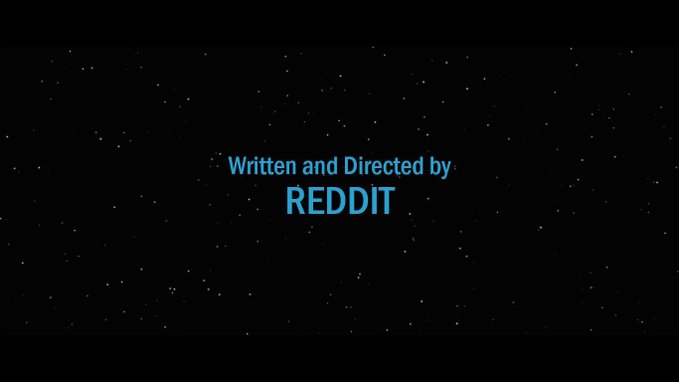
As someone who is disillusioned to nostalgia as a primary method of storytelling or selling products to audiences, my concern is with multi-billion dollar entertainment properties actively changing the trajectory of their narrative to fit the ideals of fan theories on the internet, or to ‘defy expectations’ with those fan theories as a foundation. My problem with The Rise of Skywalker is not that some people will find it charming, cathartic or rewarding. My problem is that it requires impossibly ridiculous mental gymnastics to check every box outlined in a Reddit post by design, and its response to the vocal negativity and controversy surrounding The Last Jedi. The vision of TLJ was completely repealed, revised and retconned into something that I deem to be sanitized, cowardly, rushed, poorly planned and boring. Walter Chaw writes in his article for Film Freak Central that TROS “immediately reassures us that everything’s all right, there’s nothing to be afraid of, go back to sleep.”
The Rise of Skywalker cares more about pandering to a specific kind of Star Wars fan and attracting dollar bills than it does about forming a complete narrative picture with appropriately structured setups and payoffs. Because whether you liked The Last Jedi or not, it’s clear that the movie was trying to do something. The ideas presented in that movie were refreshing, challenging and unlike any other Star Wars movie to date. Even if you disagree and hated the movie’s themes of existential meaninglessness, at least you’re admitting that the movie had themes. And all of those themes were discarded–that vision thwarted and removed without a second look–in a haphazard attempt to win back disgruntled fans. Sure, this revision in TROS works for that purpose, but it does not work as a coherent film series. It does not create a connected world of story that follows through and expands upon questions and narrative threads laid by the movie directly before it. In fact, it overrides many of the movies that precede it, and the characters’ respective arcs within them.
The Disney trilogy seems to be in conflict across films–the movies do not work together as a harmonious ecosystem. The Force Awakens reintroduces new fans to Star Wars while also feeling, to old fans, like a rehash of A New Hope that gives audiences exactly what they were looking for in a soft reboot. As a launching pad, The Force Awakens could have shot off in many different directions with the new cast. The movie posed these questions, the internet had a field day theorizing on the answers to them, and The Last Jedi responded to us with inconclusive, divisive existential dread. There are no real answers that can be neatly tied in a bow for the audience; we have to live with the fact that the past cannot always make sense of the present.
The main issue with TROS is how it does not expand upon TLJ; it seems as though it is written to systematically undo all that movie was trying to achieve, gluing all the questions from TFA back together after being destroyed by TLJ, much like Kylo Ren’s helmet is patched together in TROS. Finn and Poe are sidelined, their arcs amounting to virtually nothing. The exclusion of Rose Tico as a main protagonist of this movie also exemplifies this point; the movie responds to backlash by pretending there was no romance, friendship or importance to her character, waving a hypnotic hand in front of the viewer as if to say, “this isn’t the character you’re looking for.” All must be as it was before, and we’ll work double time to push two movies into one to override the last. To quote Walter Chaw again:
The Rise of Skywalker could be described as a mere compendium of betrayals it commits against itself. None so egregious as that of Trần Loan’s Rose Tico, reduced in this one to cheerleader and reaction shot in what amounts to fewer than five minutes of screentime; or even the introduction of a potential same-race love interest for Finn (John Boyega) to deflect his same-sex chemistry with Poe (Oscar Isaac) and interracial chemistry with Rey. Some of the betrayals are to the theme and spirit of Star Wars, you see, or to its own narrative. Others are to everyone who isn’t straight and white. There’s a whiff of nostalgia to that for much of the worst of fandom, alas. Our current President ran on it.
There’s a very insidious trend happening in entertainment: creators reading online reviews, theories and conjecture and forming their narratives to fit or defy the expectations of their audience. We saw this happen earlier this year with Game of Thrones, and we’re seeing it again now.
The Rise of Skywalker, as many others have joked, reaffirms every single angry fan and scrubs away the damage done. You wanted answers? Well, here they are, ready for your consumption. As Jake Cole writes in his eloquently scathing review for Letterboxd:
Rian Johnson somehow slipped under the radar with a truly unique, worthwhile contribution to George Lucas’s unwieldy universe, and he has been rewarded for it with years of navigating fan backlash on his lonesome and a press rollout for this follow-up that has taken numerous potshots at his film to reassure angry fans that things will end “correctly.”
That spirit infuses The Rise of Skywalker, the most soulless entry of the Disney era of Star Wars and perhaps the new prime example of how this age of filmmaking has brutally jettisoned vision and surprise for slavish devotion to IP and what a bunch of executives think you, the stupid public, want to see. This is two and a half hours of nonstop stuff, incessant exposition that flits through scenes designed to micro-target every possible fan-service desire at the expense of coherence or meaning. It actively unravels The Last Jedi‘s bold revisions and thematic questions, cooing into the audience’s ear that everything will be as they want again, like massaging a pill down a dog’s throat.
Rey’s parentage has been a point of contention since the beginning of the movies; after TFA came out, people took to the internet to make their fan theories and guesses as to who she could possibly be. Rian Johnson said in a 2018 interview for Vanity Fair:
‘I went through all the possibilities of who her parents could be,’ Johnson said. ‘I made a list, with the upsides and downsides’ (a list that was probably promptly destroyed by a harried Lucasfilm intern). He landed where he did because he was fond of ‘breaking out from the notion that the Force is this genetic thing that you have to be tied to somebody to have. It’s the ‘anybody can be president’ idea, which I liked introducing. The foremost thing, though, was just dramatically, storytelling-wise.’
Not only does Johnson subvert fans’ expectations after TFA by showing how ultimately unimportant Rey’s parentage is to the story, he also responds to the prequels’ weird, eugenics overtones of the force. Anyone can use the force; we can all claim it for ourselves regardless of who we are, where we’re from, or our family name. To some, this was an insulting revelation: they wanted references, callbacks, and ties to the Skywalker clan. To others, this bait and switch was empowering. Johnson’s oppressive authoritarian First Order lives in the shadow of the Empire, an echoing remnant of the past, where the heroes come from nothing, impacted only by how the violence ripped apart their lives. The resistance, for the most part (exlcuding Leia), are made up of a rag-tag group of nobodies who just want to fight the good fight and overthrow space fascism.
When Snoke dies in TLJ, we’re left with unease–not because we’re unhappy that he’s gone, but because this genocidal army that destroys literal planets remains in complete tact without him. When The Force Awakens introduced the First Order, I couldn’t help but wonder: how could these people rise to power with the Resistance around? How could this world of story possibly allow another authoritarian presence to rise up, thrive, and steal child soldiers for their army? The most horrifying answer to these questions would be that regardless of historical precedent, the First Order still managed to gain power organically. TROS, however, seems to imply that behind the scenes, the Sith have orchestrated and manipulated the entire affair, subtly whispering evil nothings in the ears of people like Ben Solo. After all of this time, there is no complex political mechanism–it was the same old, white guy from before.
To make Rey a Palpatine is to tell the audience that blood ties DO absolutely matter. Exceptionalism reigns supreme. She can shoot lightning from her finger tips and use Lay on Hands, but I bet you feel bad for calling her a Mary Sue now that we’ve made it impossible to criticize her abilities because of her genetics. The Force is no longer something that a normal person can tap into and hone through practice and meditation, it’s in your blood. In her book Women of the Galaxy, Amy Ratcliffe writes:
Even beyond the trappings of the Star Wars saga–the First Order, the Resistance, the Force–Rey’s story is inspiring, familiar and timeless. Just because you come from nothing doesn’t mean you’re not a part of the story. You’re not no one because anybody can save the galaxy. Anybody.
Another compelling aspect of The Last Jedi was “letting the past die.” Kylo Ren’s motivation to murder people and expunge the world of the Jedi contrasts to Rey’s preservation of some elements of the past (such as the Jedi texts) while re-contextualizing them. To entirely discard the past and burn it to the ground would be a mistake fueled by anger and vitriol. It is much wiser to use the past to guide our futures, learning from our mistakes and forging forward to create a better world. Luke Skywalker isolates himself from the rest of the galaxy because he is too overwhelmed by the cognitive dissonance of what he represents as a symbolic figure juxtaposed with the Jedi’s role in unwittingly assisting the Empire.
The Disney trilogy seems to posit Kylo Ren as being on the same trajectory as Vader: a tragic and misunderstood character who will be eventually redeemed. But as Quinton Reviews says in his video essay, there’s a sharp break in their journeys as reflections of one another:
Kylo Ren goes from the Anakin Skywalker figure, waiting to be redeemed, to the Palpatine figure. The mass-murderer whose motivations are exclusively that he’s hungry for power. This is something that even his mother admits. Ben Solo is dead. There’s no going back.
Ben Solo’s redemption is only satisfying to an audience whose expectations were built upon his role as an Anakin figure. In reality, his face turn is not rewarding or earned. People often cite Prince Zuko from Avatar the Last Airbender as being one of the most fulfilling redemption arcs in popular culture, and if we’re using him as a barometer for redeem-ability, Kylo Ren failed his Litmus test after killing Snoke and plunging deeper into darkness. There’s no apology or admission of guilt, and he doesn’t take pains to show everyone around him that he has changed, repented, and realized what sparked his pull towards the dark to begin with. His pursuit of Rey is not a bond of love and friendship, but an invasive technique to find her and foil her plans. This sudden revelation of the “true” or “correct” ending to his character is indicative of the movie playing it safe, recycling elements and character moments from other Star Wars films without deviating to create something interesting, refreshing, or new. It is not only Rey and Kylo Ren who traverse the shambled, ruined corpse of the Death Star–the audience does so as well. J.J. Abrams’ end to the Disney Star Wars trilogy might tangibly unearth Palpatine, but thematically, the movie also digs up the bones of the original trilogy and beats its audience to death with them.
The movie wants to desperately appease fans by creating something so unbelievably Star Wars, but absolutely nothing otherwise. The new Disney trilogy had so much potential to subvert, build upon the original trilogy, and restore faith after the prequels. While I will not argue that the prequels are good or even better, it is clear that Lucas was attempting to tell a complex story about the inner-workings of war and political corruption. He had a plan for his characters, but a terrible execution. It is impossible for me, at least, as a viewer, to disassociate the cultural and corporate elements of this reboot– just as it is impossible for some fans to disassociate their identities as fans from the intellectual property of Star Wars.
Nonetheless, whether you enjoyed the movie or not, I employ you to be active and aware; Disney racked up eighty percent of the top box office hits this year. Their idea of LGBT representation is a throwaway, blurry background clip of two unnamed characters that can be easily cut out of the movie without changing the narrative for foreign markets. We should enjoy movies, even Disney ones. We should also be aware of how intellectual properties function within our culture, and how corporations take advantage of the yearning masses who want to see compelling stories, and not thoughtlessly accept regurgitated plots with updated visual affects. To close, I will quote Rian Johnson once more:
When people ask me, ‘Don’t you think people are going to get sick of Star Wars movies?’ to me that question indicates that they’re thinking of Star Wars movies as a museum exhibit that is wheeled out once a year or so you can say, ‘Oh, I loved that thing. Oh, I remember that thing!’ And yes, if Star Wars is that, people are going to get sick of it really quickly. But if Star Wars are great new movies that are exciting and fresh, and that challenge you and surprise you and make you feel things and engage you the way that those original movies did–but always taking you to new places, both in the galaxy and emotionally — that’s never going to get old. That’s what it’s all about.
Works Cited (In Addition to All Movies Listed)
Chaw, Walter. “Star Wars: The Rise of Skywalker (2019).” Film Freak Central. Available Online At: https://www.filmfreakcentral.net/ffc/2019/12/star-wars-the-rise-of-skywalker.html. Dec. 18 2019.
Cole, Jake. “Star Wars: The Rise of Skywalker.” Letterboxd. Available Online At: https://letterboxd.com/jakepcole/film/star-wars-the-rise-of-skywalker/. Dec. 19 2019.
Desta, Yohana. “Last Jedi Director Rian Johnson Explains Why Rey’s Parental Twist Had to Happen.” Vanity Fair. Available Online At: https://www.vanityfair.com/hollywood/2018/01/the-last-jedi-rey-parents-rian-johnson. Jan. 17 2018.
Quinton Reviews. “Rise of Skywalker is (hilariously) Bad.” YouTube. Available Online At: https://www.youtube.com/watch?v=U_D-HPjmacY. Dec. 22 2019.
Ratcliffe, Amy. Star Wars: Women of the Galaxy. Chronicle Books. 2018.
Welcome to the Star Wars zoo: The Rise of Skywalker domesticates whatever wonders existed in this franchise and sticks them in a cage.” Vox. Available Online At: https://www.vox.com/culture/2019/12/21/21030578/star-wars-the-rise-of-skywalker-bad-episode-9-disappointing-problems. Dec. 21 2019.
Yamato, Jen. “On the other side of ‘The Last Jedi,’ director Rian Johnson found the ‘Star Wars’ journey he was looking for.” LA Times. Available Online At: https://www.latimes.com/entertainment/movies/la-et-mn-star-wars-the-last-jedi-rian-johnson-20180403-story.html. Apr. 3 2018.
Secondary Sources
Alexander, Julia. “Disney produced an unprecedented 80 percent of the top box office hits this year. Star Wars: The Rise of Skywalker pushes House of Mouse over the top.” The Verge. Available Online At: https://www.theverge.com/2019/12/23/21034937/disney-star-wars-box-office-2019-marvel-pixar-star-wars-avengers-lion-king-frozen. Dec. 23 2019.


Leave a Reply