I loved the new Resident Evil movie. It was fun, brutal, and a very rewatchable film. I loved how it takes place in the winter – very The Thing. The performances were great, the kills are gnarly, every single promotional poster is bad ass, and yes, I even loved when he shouted “yeah, video games!” Amazing shit. Pure cinema.
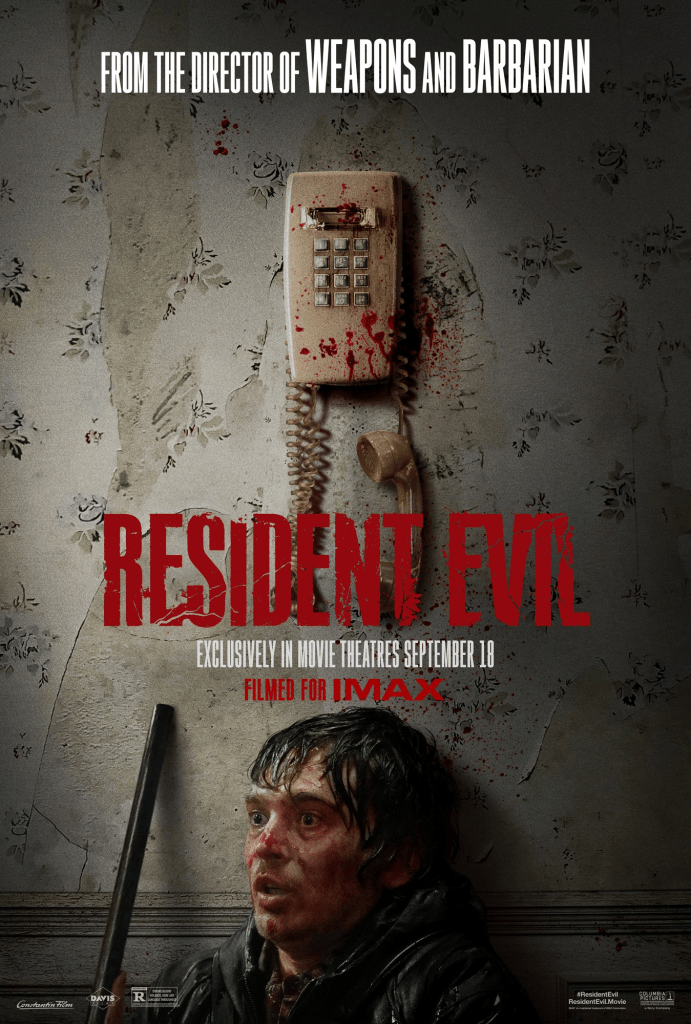
The ending of Resident Evil (2026) has been contentious, and it’s not hard to see why. A likeable, relatable protagonist, who tries to do the right thing in every twist and turn of unfortunate events doesn’t save the day. Bryan becomes a sentient, mutated, monster whose only reprieve would be a swift death. He doesn’t deliver the cure, protect innocent lives, or reunite with loved ones to set things right. The character doesn’t fully redeem himself or become the father he was afraid to be, and that’s the point. We’ve reached the end of millennial optimism in favor of what I’ll call 2020s nihilism. We see a bleak view of how we participate in systems that don’t value human life, and the 90s cool hero fantasy of every-men like John McClane and Neo slip away from the cultural consciousness.
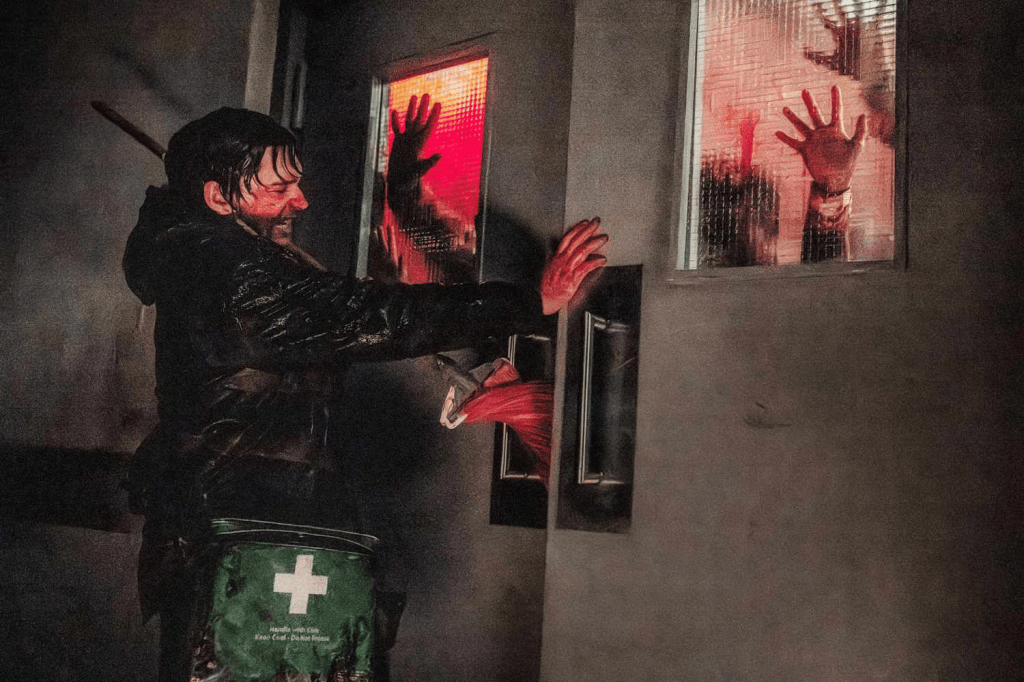
I won’t pretend to be a RE aficionado; I have some knowledge of the games, but I’ll be the first to admit that survival horror is not my thing. I enjoy watching other people play, but as soon as the veil of the screen is removed, it feels too real to me. I did enjoy the references to the game, like the typewriter, padlocks that couldn’t be shot, random med kits, being in a hospital parking bay, over the shoulder first person POV…yeah, I got them!! That being said, even I know the real villain of Resident Evil has and always will be the Umbrella Corporation.
Umbrella had influence in the production and sale of cosmetics, chemicals, pharmaceuticals, industrial machine production, consumer products, health foods, the transportation industry and tourism. Umbrella’s large array of subsidiaries was typical for large-scale corporations, though it was purposely built to cover up illegal activities.
Soon after the opening of its pharmaceutical subsidiary, Umbrella Pharmaceuticals, Umbrella began developing biological weaponry for militaries across […] Umbrella Pharmaceuticals were able to cover their true intentions by researching vaccines for the same viruses as a front.
Umbrella’s true goal was not, in fact, a capitalistic urge for monopolization of a lucrative industry. It was eugenics. […] This project was to birth a new race of virally-enhanced and well-educated superhumans who would advance human civilization for generations to come with Umbrella’s founders ruling through them as gods.
While none of this lovely lore is important to enjoying the movie, I think it’s worth noting that this company, has never, and never will, have noble intentions. Yes, I’m quoting from the Resident Evil wiki. I have no shame in that! What interests me in regards to the movie is not that Umbrella is an evil corporation; like I said, we know this, it’s been explored and discussed at length for years by people more invested in the games than me. What interests me is how Ryan Cregger’s adaptation of Resident Evil uses this company in the narrative, and how it reflects on our current anxieties in 2026. Something that struck me as interesting is that their pick for protagonist isn’t your beautiful, friendly neighborhood ACAB exception, Leon S. Kennedy. He’s not a cop or detective. He’s just a guy in really bad circumstances. He’s who an audience member in 2026 can see themselves in.
Bryan Hodukavich (the lovely Austin Abrams) is a medical courier tasked with bringing what he thinks is an organ to a dying patient to Raccoon City. It is revealed that he actually has the cure to the bioweapon that was created by Umbrella, whose employees were incompetent enough to destroy their remaining stock of, and who are stuck on the top floor of the hospital in their ivory tower as the rest of the city has become infected. The Umbrella employees that Bryan meets all die in magnificent ways and are short-lived in the narrative, but Paul jams a lot into his screen time (being played by Paul Walter Hauser helps). He’s a scientist that is totally blasé, cowardly, and won’t take any accountability; he has no remorse or empathy for any of the people he did a part in harming, leaning on the corporation’s pursuits to explain any culpability in this “accident”. Without taking too many leaps here; this is what we’re seeing now in the technofascist world we live in. Too many people obfuscating their own guilt in future or present atrocities, creating technological advancements without any understanding of what repercussions they may have. See ChatGPT’s CEO Sam Altman who says “AI will most likely lead to the end of the world, but in the meantime there will be great companies created with serious machine learning.” Cool, Sam! We live in a test tube designed by Silicon Valley incels. I think this part of the movie was difficult to stomach for me, as someone who has been grieving my own millennial optimism. There was once a world where science promised to create a hopeful future, and during the pandemic, many of us were its champions against the harmful spread of anti-vaccine propaganda. Now with AI, meta glasses, NFTs, Flock cameras, big pharma, insurance companies, and whatever slop or surveillance state bullshit we’re dealing with, I’m finding myself less and less hopeful at the explorative projects of the future, and way more cynical. Again, this is nothing new, and there’s always going to be people yelling about how technological advancement is leading us to the end times, but I find that Resident Evil shows this nihilism poignantly. These corporations protect individuals from taking responsibility for their own part in these systems they create, and the companies themselves regard an outbreak like this as nothing more than an accident they can write off as collateral. While they don’t own up to their mistakes, they do end up getting killed by the same outbreak they caused, which is a small compensation for any horror audience, but the fact of the matter is, no individual death here is going to illuminate Umbrella’s corruption or legislate them to change.
Let’s talk about Bryan: He is funny, well-intended, and totally underqualified for the job that he ends up doing. He’s endearing. He doesn’t know how to shoot a gun outside of a video game (same), isn’t equipped for the job but lies to get the overtime (understandable), and has a lot of growing up to do. I also hated his response to his pregnant girlfriend because it feels like a check list of preapproved phrases a man should say in the current year (saying your body your choice) while being emotionally closed off and unwilling to take partial responsibility. F.D. Signifier has a really awesome video about modern masculinity and Obsession I’ll link here: https://youtu.be/mqarAO1rJrY?si=gVh36AvYmNEQ5wS-. Needless to say I am not comparing Bryan with Bear, but rather, critiquing what made his response bad in the first place, which the movie already does in detail. Of course, by the time Bryan is wistfully looking at the stick figure family on the back of an SUV and crying into his voice memos, we may be thinking that it’s still possible for him to get out of there alive, but alas…The movie laughs at him for crying. The movie laughs at him for thinking he could ever survive this and make his own choices or have a moment of self-actualization. For many of us, the stick figure family is a symbol of cringe, but it’s also the type of cringe that many of us once aspired to and are denied as the price of groceries, housing, and everything else skyrockets. Those stick figure people are homely and quaint, the simple work of a bygone era. Bryan is given an immense responsibility, but this is not the story of the every-man who independently thwarts the evil bad guy. This is a story of a man who does everything right, who cannot overcome this corporate malpractice and save the day. The question I haven’t been about to stop asking myself is: why should we expect him to? Why should we expect the actions of one person to negate the actions of so many others who are more powerful? What would that even say about the countless lives lost anyway?
The other night I watched The Faculty; it’s a super fun 90s horror comedy directed by Robert Rodriguez with a stacked cast. Totally recommend it. The thing about the movie is that it has some tepid themes of the public educational system molding kids into a hive mind mentality that doesn’t completely land but is fun in that nonconformist, Gen X kind of way. The movie ends with everything resetting to how it was beforehand, chocking it up to small town sci-fi shenanigans, and it hit me… that is what my generation is accustomed to. We grew up with these narratives without the risk of discomfort. Even in horror movies, we have a final girl – it’s a formula that we can trust – that one person will be able to defeat this grander evil, unless you’re in Final Destination or a David Fincher movie or something. Cregger is not the first to do it, but that doesn’t mean that his abrupt title card at the end of his film is any less jarring. It’s a gut punch because it doesn’t offer a solution or remediate with its audience. Obsession also has an ending that leaves us feeling like shit, sitting in the emotions we just experienced. Hell, so did Buddy. It’s a hot mess that can’t be tied into a neat bow for our consumption. This trend reflects the death of millennial optimism – the death of being assured that if you do everything the right way, you’ll get your stick figure family. If you work hard, doing the jobs of ten other people, you’ll somehow be exceptional in a world dictated by billionaire oligarch pedophiles. Maybe Resident Evil‘s ending makes you feel like shit, and maybe, that’s the whole point.


Leave a comment