Neva is a 2024 game published by Nomada Studio. You may know them as the creators of another beautiful water color inspired adventure, Gris, which I spoke about a few years ago on the blog. They share similarities: both are puzzle platformers with female protagonists, both have themed chapters (in Gris, colors, and in Neva,…
Neva is a 2024 game published by Nomada Studio. You may know them as the creators of another beautiful water color inspired adventure, Gris, which I spoke about a few years ago on the blog. They share similarities: both are puzzle platformers with female protagonists, both have themed chapters (in Gris, colors, and in Neva, seasons), both are Spanish words (Neva being a name associated with “nieve” or snowing, Gris meaning “gray”), and both games offer a rewarding progression system where a character must earn their strength, using the typical RPG system to center intense themes of grief, isolation, and resilience. Both are worth playing and made me feel deep sadness, hope, and fear. Both have intricate, breathtaking visuals in an illustrative style. Both have no dialogue.
Spoilers ahead…
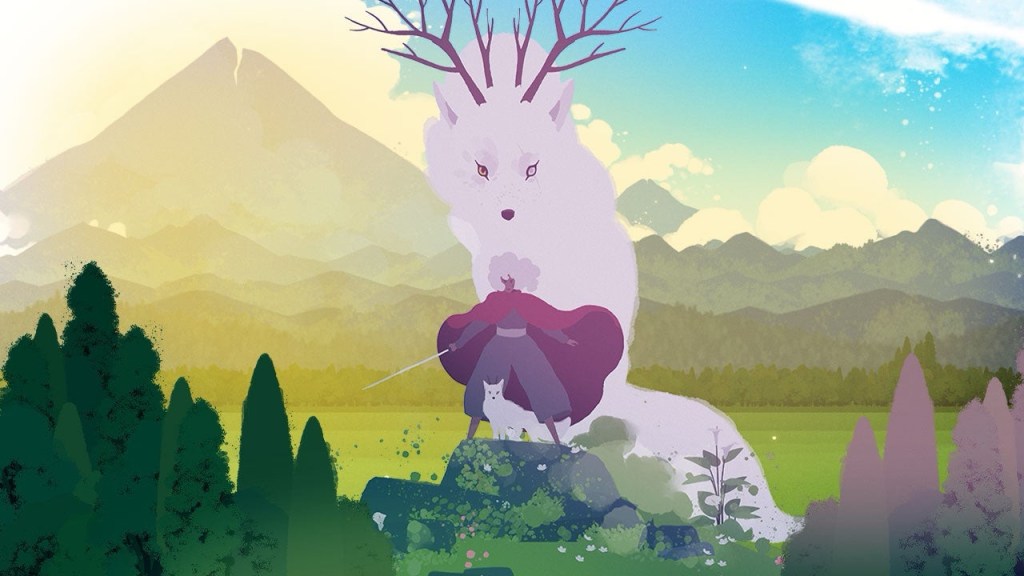
In Neva, we play a young woman named Alba, who is traveling across a world with her wolf pup, the titular Neva. The two of them traverse a landscape being transformed by darkness and fight evil creatures to restore its pastoral beauty. Simple concept, sure, but they pack a lot into this game. Besides, if you’re new here, I love games like this. Okami is another one. Yes, I love a wolf pup who is saving the environment from the evils of the world that we can view as a metaphor for capitalism, corruption, pollution, or climate change. Oh yes, one of my favorite movies is Princess Mononoke, another story about wolves as forest spirits who are distrustful of the human world and our propensity for war, greed, industrialization, and destruction. I am a farmer’s market loving, tree-hugging hippie dippie. Neva is more than the sum of its parts, however, it’s a story where growth is central to its themes, whether that be the physical growth of Neva, the innermost reflections of its characters through its level designs, or of its landscapes that spiral into every direction. It is also a story about cycles, like the changing of the seasons, and the cycles of life and death, and breaking those cycles.
At the beginning of the game, we see a cutscene of a white wolf dying to the dark corruption destroying the world. Alba takes the white wolf’s pup as her own. The game begins in summer. Neva is a small pup and she trails after Alba, small, stumbling, and uncertain. We wait for her to catch up to us as we speed ahead, call her name, and grant her the confidence to make jumps on her own. She is vulnerable and needs to be protected in combat.
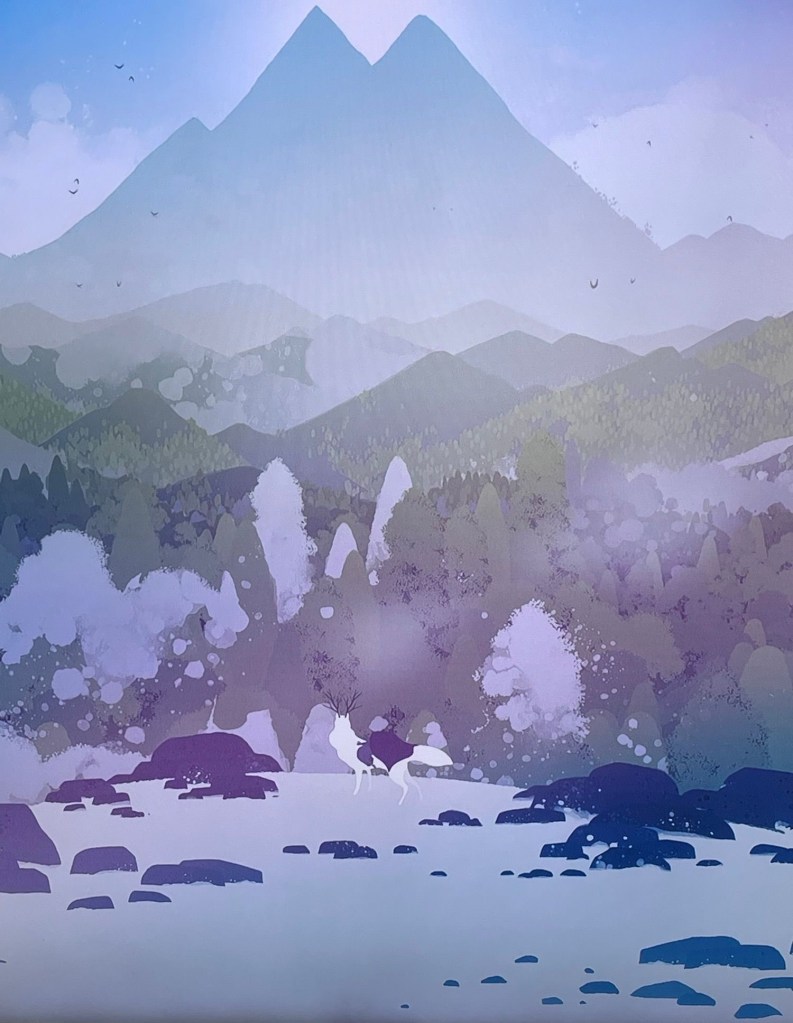
When autumn hits, Neva has grown a bit. She begins to get her bearings, running ahead of Alba. We call her back to us from getting too ahead of herself. She tears into enemies ravenously, ripping into them long after they’ve been defeated. She howls at all fallen animals, sending off each life with melancholy honor. She jumps wide gaps with confidence, waiting for us on the other side. She’s still not strong enough to fight the larger foes on her own, but towards the end of the chapter, we can control her in addition to Alba; she becomes an extension of Alba and in doing so, gains her own autonomy over the world, closer to being the protagonist.
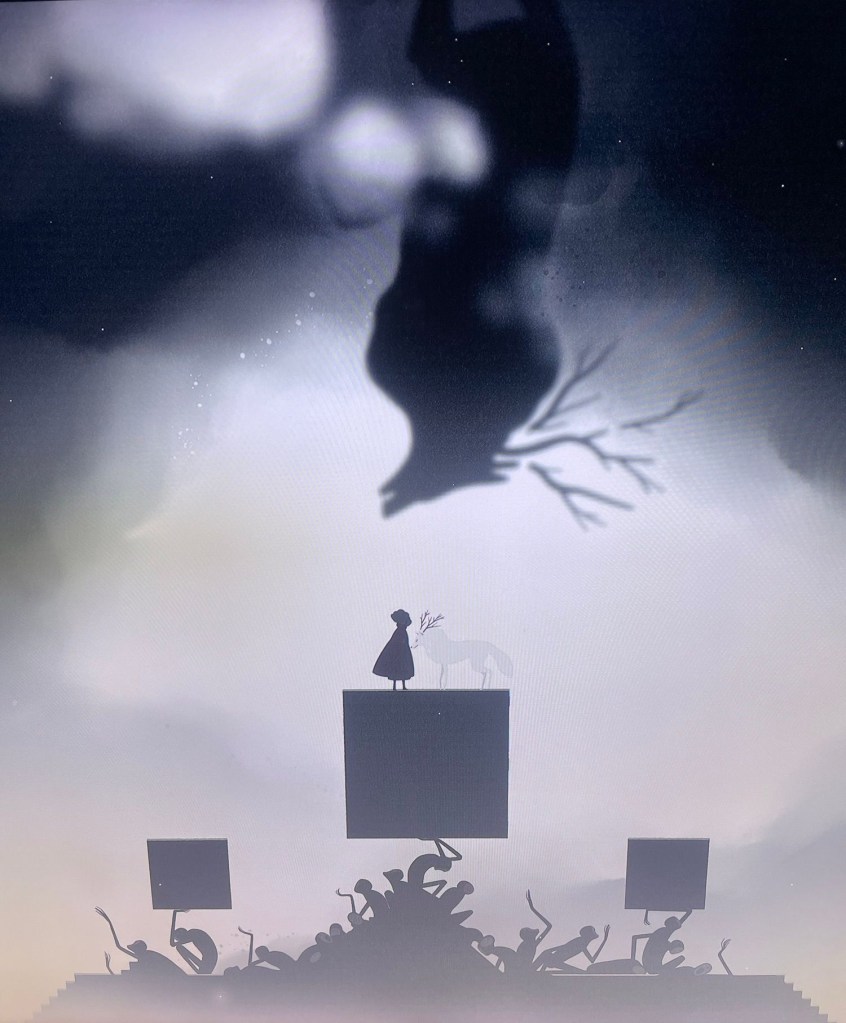
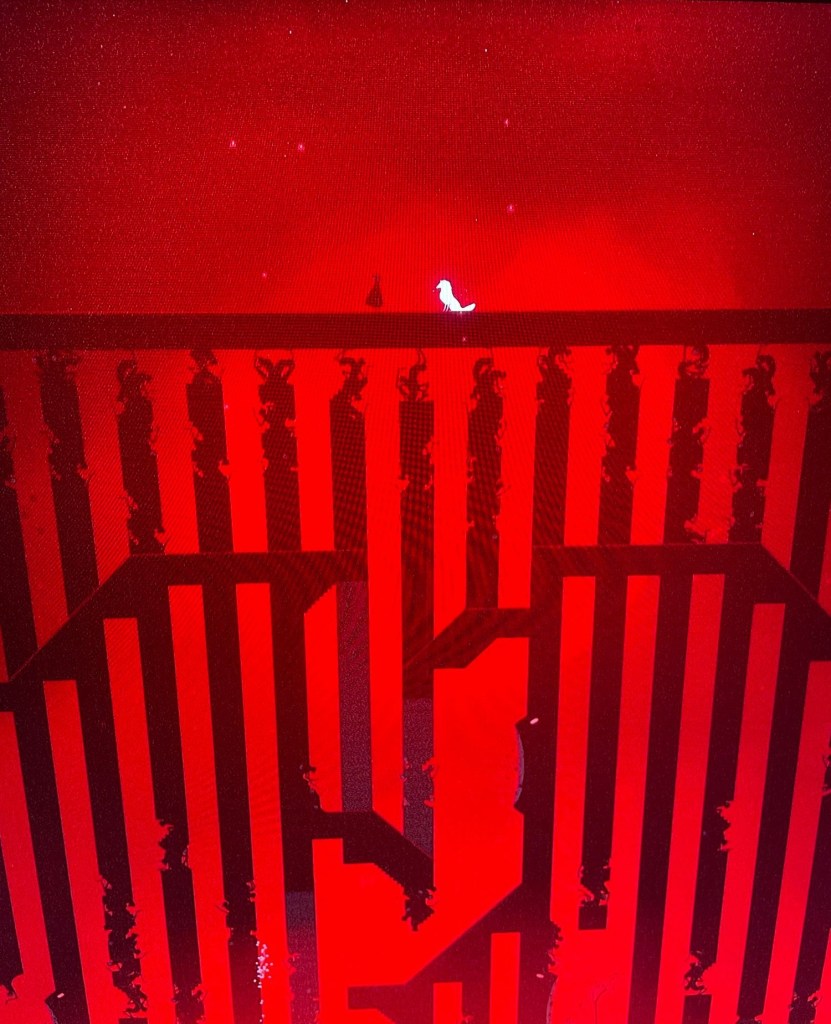
Between autumn and winter, we get a small segment of the game that is a nightmarish world; I see this part of the game not only as a dream but a vision of a future if Neva fails and what happens if she doesn’t. Her fate looms over her like a ghost. I say, Neva, because as we will soon learn, Alba does fail, and Neva is the one who must ultimately succeed. This portion of the game is drenched in horror. Alba is very teeny tiny on a screen of black and white that is so large, it swallows you up and suffocates you with isolation. Neva is gone. Instead, there are silhouettes of death and decay. When we find Neva, she leads the way and she is the light in the darkness – literally – we use her as a flashlight. As is with the rest of the game, there is a lot of unique platforming, mysterious portals, and jumping into open mouths of darkness. Hands are outstretched like trees in abrasive red and geometric outlines like some eldritch horror. We don’t know where up or down is and we fall endlessly through space. Neva and Gris play with vertical space in such interesting ways, using ascending and descending to show the characters’ emotional states as going up to overcome or down as they fall deeper into despair. The lush pastoral landscapes become barren and dark. This section of the game feels hopeless, nihilistic, and cold, like there are forces at work so out of our control, but then Neva sparkles as she runs.
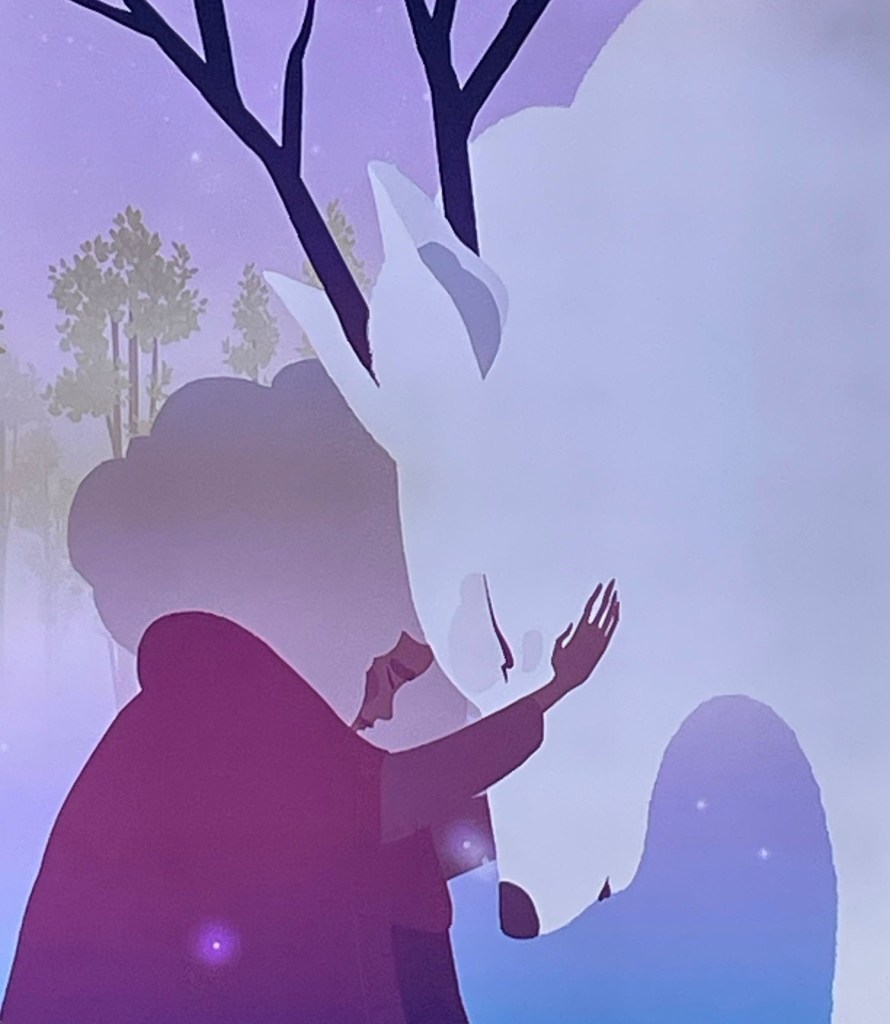
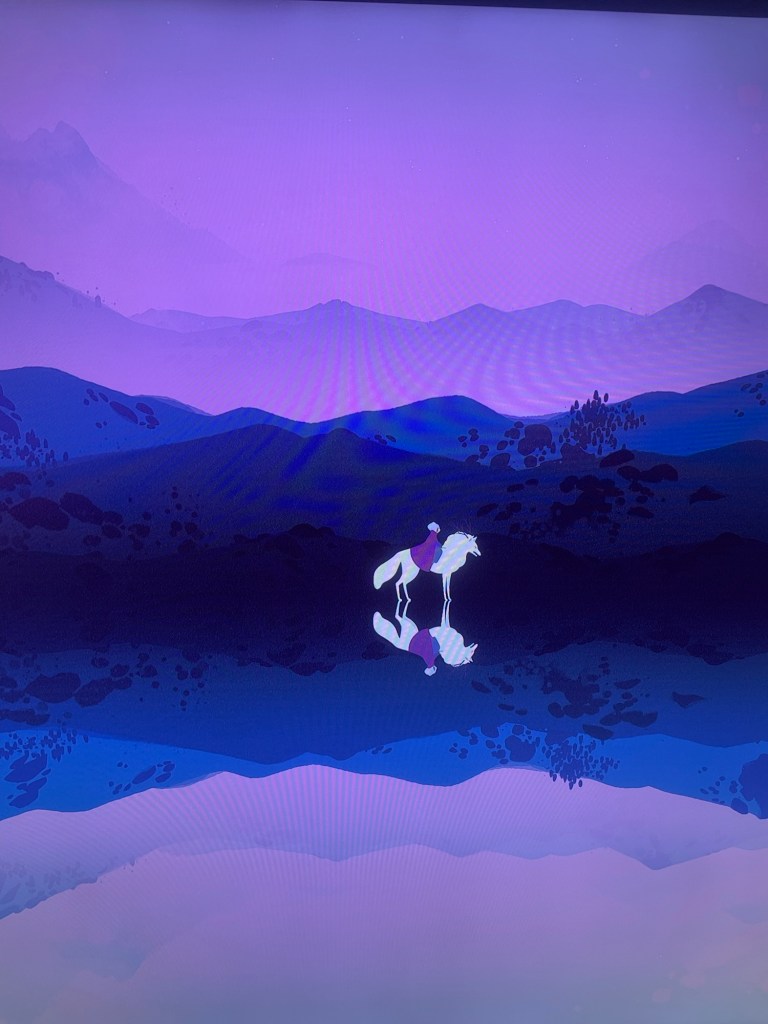
When Alba awakens, it is winter, the season of Neva’s namesake, the snow. We experience the trauma of the nightmare and are greeted with the comfort of a world not yet lost. Alba can now ride on Neva which means we are fully controlling her movement instead of using her as a tool in combat, and we are moving much faster, dominating our environment. Neva has taken over her story. The piano cords are soft and beautiful. We are on a white landscape and feel so small; in a stark contrast with the apocalyptic hellscape of the nightmare, there’s a calmness and reflectiveness to this chapter. We run so fast among the ice and trees. Neva is strong but controlled. She runs through obstacles with little effort. When they attack, they fight as one unit. The platforming and puzzles are mirrored and inverted, with reflection being as the central theme of the chapter. We see two become one.
There is a short time where Neva leaves Alba with a new mate, and Alba must brave the lonely, empty, snow capped mountains alone. Alba climbs to the kill the evil darkness that is destroying the world, then Neva returns, defeating the final boss of the game. Neva sheds off her last vestiges of childhood and who she was before, becoming who she was always meant to be. It is Neva who finishes off the dark lord, loses her eye, and is the ultimate hero. She saves the world from darkness and restores it to the beauty of its original state. They linger on the final shot of winter so you can bask in it.
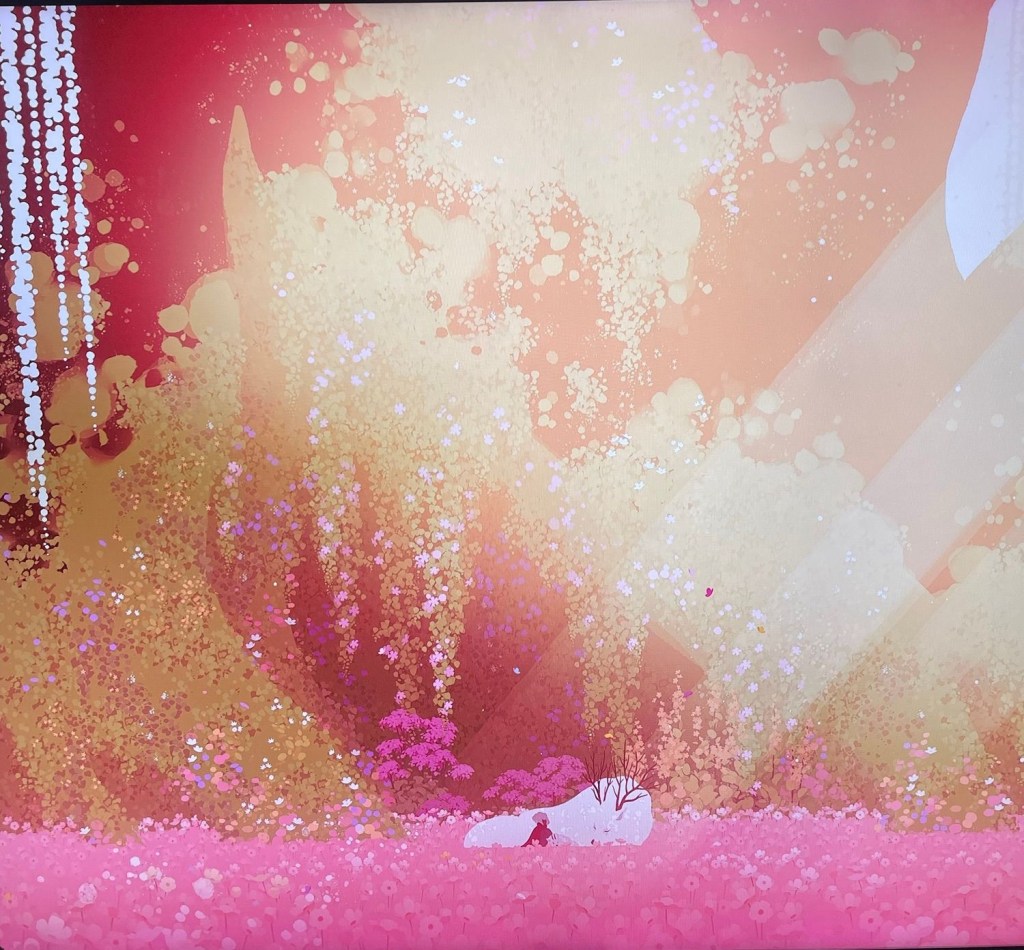
The final chapter of the game is Spring. Neva has a little cub, Bruma, who follows us around. The world is lush, pink, full of gorgeous illustrious florals. The ground is exploding with flowers, moss on rocks, ivy sprawling up trees, and ponds and lakes dot the background. Trees are in bloom. The music is calm and we hear the sounds of birds chirping. Water, lily pads, and rich foliage are everywhere. Sunlight filters in and Bruma plays with a fawn. We prance through a gorgeous, colorful world as the little one trails behind us. As we take in these immaculate vibes, birds begin to fall dead out of flight, and we realize the dark corruption is back with a vengeance. Neva must fulfill her fate of sacrificing herself to save the world. Just as I mentioned at the beginning, the game begins with a white wolf dying. At the beginning of my play-through, I thought that Neva was the pup that Alba took and the story was linear. In reality, the first cutscene of the game is actually the end of Neva’s story. There’s a trick to hiding things in plain sight – We know how the story is going to end from the beginning, with Neva’s death. This beginning as the ending gives the game a cyclical feel, until you realize the cycle has been undone. Neva sacrifices herself for peace, and Bruma and Alba continue to live in the world she saved for them. Like Gris, this revelation gives the story a deep sense of loss, as we grieve for the loss of who we think is Neva’s mother, only to find out it is Neva herself.
There is a Prologue to this game I have not played yet, so if you enjoyed this read, I might be publishing an addendum soon.
In their article, A Literary Analysis of Neva, Fadewalker writes:
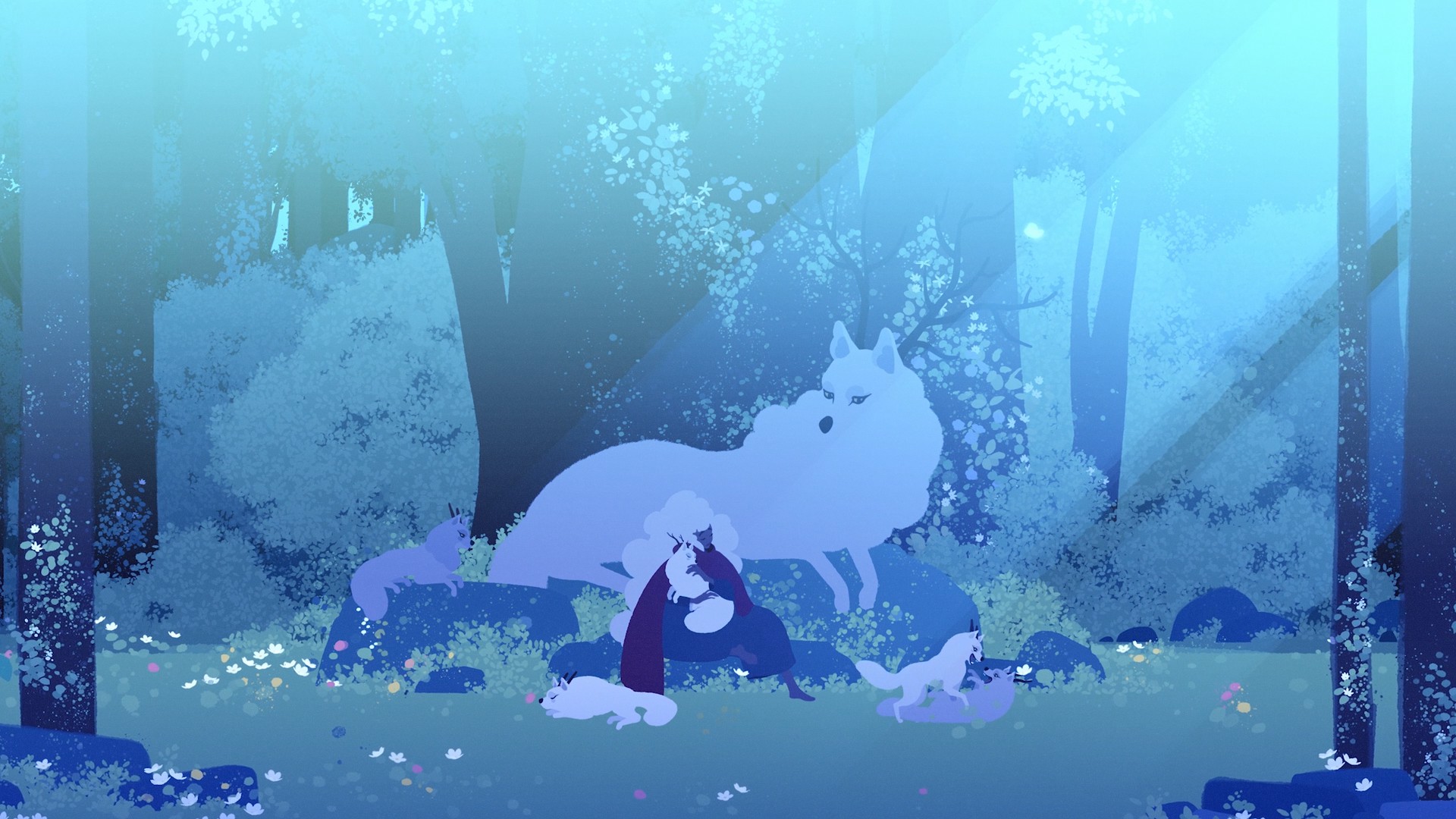
Ultimately, we can actually discover the fate of Bruma and the consequences of Neva’s sacrifice. By collecting all the lily flowers (for the Blossoming achievement), a secret cutscene is unlocked which can be found by climbing the main tree in Spring. This cutscene shows Bruma as an adult raising a large litter of pups alongside Alba. Alba is notably older in the cutscene, with a different, more mature hairstyle. This further demonstrates that there is no cycle, as many years seem to have passed and Bruma remains unharmed. Bruma is not doomed to the fate of her mother in some unending time loop. Rather, Neva’s sacrifice has built an idyllic happy future for her daughter and grandchildren.
The secret cutscene. Bruma and Alba live happily ever after, growing old together with Neva’s many grandchildren.
There is no dialogue in Neva. Characters don’t discuss motivations, desires, fears, or emotions, but the writers and designers have proven yet again that gaming is a stunning visual medium for emotional storytelling, where we can explore the depths of sadness, hopelessness, sublime, and joy. Neva is a breathtaking work of art about overcoming evil, motherhood, womanhood, death, life, nature, destruction, and some much more. I loved every second of it, and I hope you did too.

 Haleiga
Leave a comment