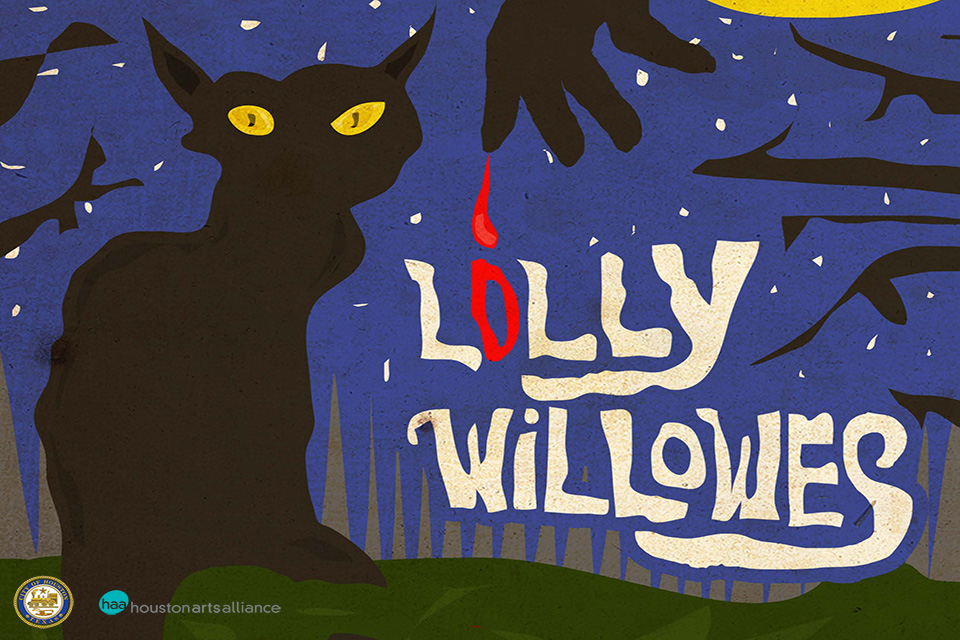
Sylvia Townsend Warner’s Lolly Willowes; Or, the Loving Huntsman explores how feminist narratives of witchcraft act as the antithesis to Christian traditions, state institutions, and patriarchal domesticity. The witch, as a feminist literary trope, evokes an image of freed sexuality and a mythologized, idealistic past. Out of the ashes of a cruel and unjust religious persecution, a vision of the witch as a rebellious, non-conforming figure was born. This empowering reconstruction of the witch is one that attempts to overcome, reconcile, and understand the constancy of patriarchal oppression, making a connection to the past to alleviate the pains of the present.
Though feminist revisionisms of witchcraft are rooted in magical realism, it is important to consider intersecting definitions of the witch as more than just a mythical figure: there was a bloody history of witch-hunting and persecution, some of which are still ongoing in parts of the world outside of the West today (Federici, 2018).
Lolly Willowes was written in 1923, meaning that the novel actually pre-dates modern and contemporary witchcraft, which was introduced to the public by Gerald Gardner and Doreen Valiente in the 1940s and 1950s. Contemporary Wicca and other variations of neo-paganism are diverse and intricate; these religious movements and traditions diverge into a plethora of beliefs and practices. It is important to note, for the sake of simplicity, that modern witchcraft practices and rituals draw upon ancient pagan motifs that pre-date Christianity. Though a broad over-generalization, many of these celebrations and practices draw upon the power of the natural elements and the cycles of the moon. Scholars such as Margaret Murray have taken issue with Lolly Willowes’ witchcraft as it exists as subservient to Christianity because modern witchcraft movements, though a popular misnomer, do not worship Satan. In Witchcraft for Tomorrow, Doreen Valiente, rather humorously, dismisses these misconceptions of witches being Satanists:
How, [Christian opponents of witchcraft] will demand, can witches who are devoted to evil and the worship of Satan, have ethics? Such a question, of course, can only be asked by those who are determined to identify witchcraft with Satanism. Satanism, however, by its very nature, can only be an off-shoot of Christianity; because before you worship Satan you have to believe in him. (82)
Like many other stories that represent the witch as a trope, Lolly Willowes’ witches borrow from reality, yet diverge into mythological interpretations of the witch as a symbol for women’s liberation under persecution. The novel’s Satan is a morally ambivalent, immortal patriarch; he is an indifferent figure that contrasts with the novel’s other patriarch’s overbearing attitudes (Laura’s brother, Henry). It is vital to acknowledge that these representations of the witch are neither entirely connected to nor disconnected from religious or spiritual paganism. Like Margaret Murray contends, the novel incorrectly conflates witchcraft with Satanism, but Warner also correctly borrows from paganism by including Laura’s strong connection to the pastoral. Lolly Willowes blends its inspirations for its witches from reality and the fantastic, just as the book’s genre transitions from a satire about a Victorian-era marriage plot to kitten familiars.
Our titular “Lolly,” whose name is actually Laura, is a spinster aunt that lives with her brother’s family after her father dies. The novel is divided into three segments: the first is Laura’s childhood flashbacks and life with her family, the second is her life in London and eventual move to the countryside alone (“Great Mop”), and the third is her accidentally making a deal with Satan and becoming a witch. Throughout the novel, there are hints at Laura’s inherent witchiness: namely, her love and appreciation of nature and her disinterest in complying with expectations of marriage. “Lolly,” a nickname she eventually sheds, was given to her by niece, Fanny, who couldn’t pronounce Laura. Just as the title suggests, Laura chooses between being Lolly Willowes, tied to her domestic life and being free as Laura with the loving huntsman (Satan), when she becomes a witch.
Laura is often perceived by critics as a passive character, but one could argue that her empowerment does not derive from completely expelling herself from patriarchal conventions (which the novel’s conclusion implies is impossible). Rather, Laura comes to live on her own terms outside of societal pressures entirely. The story does not condemn stereotypically feminine or domestic duties and pursuits; rather, Warner illustrates how this labor is vital, yet unappreciated and disrespected. Laura’s apotheosis of witchiness came from acknowledging these unnoticed, pervasive gender expectations: “When I think of witches, I seem to see all over England, all over Europe, women living and growing old, as common as blackberries, and as unregarded. I see them, wives and sisters of respectable men, chapel members, and blacksmiths, and small farmers, and Puritans. In places like Bedfordshire, the sort of country one sees from the train.” (300) Laura feels frustrated with women, such as herself, rescinding into the woodwork of society, unappreciated and silenced: “Well, there they were, there they are, child-rearing, house-keeping, hanging washed dishcloths on currant bushes; and for diversion each other’s silly conversation, and listening to men talking together in the way that men talk and women listen. Quite different to the way women talk, and men listen, if they listen at all” (300-304). She cites the division between men and women as a stifling one. To become a witch, in this sense, is to fight against the “dullness” of resigning oneself to a life of servitude: “And all the time being thrust further down into dullness when the one thing all women hate is to be thought dull… […] That’s why we become witches: to show our scorn of pretending life’s a safe business, to satisfy our passion for adventure” (300-304). It is in witchcraft that women break free of these expectations that cause them to fade away—to assert an individuality that was robbed from them in their compliance and assimilation to their domestic roles.
Growing up in an especially old-fashioned family like the Willoweses, Laura feels like “a piece of property forgotten in the will […] ready to be disposed of as they should think best” (21) because after her father died, she is passed on to her brother, ready to serve under a patriarch of another household. Warner writes that even by the standards of the time, the Willoweses were conservative: “in 1902 there were some forward spirits who wondered why that Miss Willowes, who was quite well off, and not likely to marry, did not make a home for herself and take up something artistic of emancipated” (20).
When living with her brother and his family, Laura’s havens from city life were second-hand book shops and florists, to which she went on secret expeditions, which were only secret because “no one had asked where she had been” (110). Throughout the novel, there are lush descriptions of the pastoral:
The great fans of orange tracery seemed to her even more beautiful than the chrysanthemums, for they had been given to her, they were a surprise. She sniffed. They smelt of woods, of dark rustling woods like the wood to whose edge she came so often in the country of her autumn imagination. (118-119)
Laura’s love and appreciation for nature, along with her comfortable isolation, both foreshadow her eventual choice to become a witch.
Laura is so unnoticed by her family, yet so depended upon; she realizes, almost in a snap of rebellion, that she can just leave London and live on her own because she has the means to do so. The Willowses were a fairly wealthy family, and despite not working outside of the house, Laura had money of her own. Laura’s money, however, was treated as a man’s concern: “You know nothing of business, Lolly. I need not enter into explanations with you,” her brother Henry says, “your capital has always been in my hands, Lolly and I have administered it as I thought fit” (139). He goes on to explain that he transferred most of her money into a failed investment. Despite the family not condoning her living on her own in Great Mop, his disclosure of his irresponsibility and inconsideration of her finances is enough to solidify her decision to leave.
In her novel, Witches, Witch-Hunting and Women, Silvia Federici discusses how the commodification and control of women’s bodies is a systematic evolution of state power under capitalism. Specifically, Federici researches how land enclosures in fifteenth-century Europe contributed to witch-hunting. Through the ascension of enclosures and the introduction of private property, women were torn from their own land and ostracized into domesticity, establishing men’s authority as the holders of the means of production. Her book draws these conclusions from overlapping evidence during the witch trials:
[M]ost of the evidence is circumstantial. In none of the trials of which we possess the records were the women accused described as victims of expropriation. It is acknowledged, nevertheless, that, as in the rest of Europe, in England witch hunts were predominantly a rural phenomenon, and as a tendency, they affected regions in which land has been or was being enclosed. […] Alan Macfarlane had shown that the map of the witch trials and that of the enclosures coincided. (40)
Federici outlines how a variety of factors eventually lead to the fear of women’s liberation and institutional misogyny; she cites how privatization of land caused women who were once self-sustaining, such as healers or mid-wives, to be villainized and labeled as witches, but she also asserts:
Poverty, however, was not the immediate cause of witchcraft charges. Two other factors contributed to the making of the witch. First, witches were not only victims. There were women who resisted their impoverishment, and cursed those who refused them help; some made nuisances of themselves […] But we may wonder if behind the threats and evil words we should not read a resentment born of anger at the injustice suffered and a rejection of marginalization. […] (Second,) To the economic factors that are in the background of witchcraft accusation we must add the increasingly misogynous institutional policy that confined women to a subordinate position with respect to men and severely punished any assertion of independence on their part and any sexual transgression as a subversion of the social order. (45-46)
This vision of the witch became a scapegoat for any woman who deviated from the social norm; however, Federici admits that the witch-hunts were not a conspiratorial extermination of promiscuous or impoverished women; much like how society functions today, sexism can manifest as internalized, cultural behaviors rather than blatant hatred or bigotry. It was not just men in power, but also other women who contributed to these witch-hunts, siding with oppressive forces out of fear or ignorance.
Federci’s novel outlines a historical context that connects witchcraft to economic disparities; it is important to note, that if not for the fact that Laura came from a fairly wealthy family, it might have been nearly impossible for her to retain status as a single woman with some money of her own. Laura breaks out of this paradigm when she takes the rest of her money and becomes independent, finding a community outside of her family’s influence. Laura’s financial independence, albeit not as lucrative as it should have been due to Henry’s indiscretions, enables her to make a choice at all.
Ultimately, both Federici and Warner conclude that many interworking parts contribute to the creation of unjust societal hierarchies. Federici’s focus on institutional oppression aligns itself with Warner’s view of the church, the crown, and tradition as systems that seek control and order over the populace. How these systems control the bodies and lives of women, whether in reality, or in literature, coincide, forming a historical narrative.
Lolly Willowes was written before Federici’s work, and Warner based her book on the fantastical scholarship of Margaret Murray, a woman who was ostracized from serious academic canon by mythologizing and reinterpreting European witch trials. Mimi Winick writes about Murray as a trailblazing force that deconstructed the historiography of the witch into a powerful symbol of rebellion:
In Murray’s account, the witches do not occupy the submissive position they had typically occupied in traditional accounts; she gives them a voice, and, moreover, something new and surprising to say: that they are not truly a heretical part of a patriarchal Christian European culture but the enthusiastic practitioners of a far more ancient religion that originated in goddess worship. (569)
Murray reimagines history as a fluidic narrative. This narrative of the witch, past and present, forms a catharsis of womanhood as a means to explain women’s suffering and persecution as a persistent reoccurrence throughout time. Historical narratives rely on projection, blurring the lines between accounts that we have of the past and contemporary political applications. According to Silvia Bovenschen, witches can be “a wish projection resulting from unrealized female potential,” and a motif of the continuity of revolutionary feminism (83):
In the image of the witch, elements of the past and of myth oscillate, but along with them, elements of a real and a present dilemma as well. In the surviving myth, nature and fleeting history are preserved. […] the revival of the witch’s image today makes possible a resistance which was denied to historical witches. This moment of resistance is, however, contemporary and political. (87)
Warner’s humanization of the witch, in essence, preserves the image of fighting against systems of power as a contemporary issue that forms a connection to the past. She vindicates her titular character’s resistance to that oppression, criticizing women’s domestic imprisonment and the “dullness” that arises from their place in the household.
Some feminist writers, such as Diane Purkiss, criticize the blurring of history and fantasy. Purkiss delves into how literary interpretations of witchcraft are based in women writer’s anxieties and anger rather than the prominent “myth” of the witch as a historical war against women. She writes that, “[I]n early modern England, the witch was a woman’s fantasy and not simply a male nightmare.” (i) She asserts that feminists’ narratives of witches are just that—narratives: “Through witch-beliefs and stories about witches, early modern women were able to express and manage powerful and passionate feelings that still resonate for us today.” (i) These narratives are manifestations of “feelings that could not be uttered in a seventeenth-century context: unconscious fears of and fury with children and mothers.” (i) The witch as a myth becomes a powerful symbol of identity: “In our own era, groups as diverse as women writers, academic historians and radical feminists have found in the witch a figure who justifies and defines their own identities.” (i) Purkiss writes against some feminist interpretations of witchcraft because they enlist anyone who disagrees with their role as the witch as an inquisitor. Lolly Willowes, however, does not implicate the audience as a bystander or enforcer of oppression. Being that the story is written in third person (unlike some of the poems that Purkiss criticizes which are written in the second) there is no ominous finger-pointing at the reader.
Is it disingenuous to reflect these pages of history in our own modern lives, forming this catharsis with our ‘sisters’ from the past in order to reconcile our own hardships with contemporary political issues? Justyna Sempruch writes about feminist constructions of the ‘witch’:
As a radical feminist identity, the ‘witch’ strategically represents both the historical abject figure subjected to torture and death, and a radical fantasy of renewal in the form of a female figure who desires (and articulates) a cultural transformation ‘that has not happened yet’ and also the one who already marks that transformation. Thus, the feminist witch succeeds in subverting her own (abject) identity by converting it into a political fantasy. (115)
Like Purkiss, Sempruch discusses how witches “can only represent all oppressed women if we know very little about them,” (116) urging against a monolith of identity. And yet, in regards to Lolly Willowes, it is not merely a feminist empowerment fantasy—its derisions of patriarchal conventions and societal traditions are not clear cut. Lolly Willowes recognizes that the witch is a symbol of freedom within one’s own sphere, but also implies that there is no such thing as true freedom. Purkiss writes about Lolly Willowes as an escapist fantasy:
characteristically, women writers have seen in the witch a figure of all that women could be were it not for patriarchy. Lolly is a shy spinster-aunt, disregarded by the women of her family. But when she buys a cottage in the Chilterns, Lolly discovers that everyone in the village regards her as a witch, and from this comes a new, and much more powerful identity. To be recognised as a witch is to be recognised as free and independent. (22)
But, her interpretation of the novel disregards Laura’s eventual pact with the patriarchal figure of the devil. On the final page of the novel, Laura reflects:
She could sleep where she pleased, a hind couched in the Devil’s converts, a witch made free of her Master’s immunity; while he, wakeful and stealthy, was already after a new game. So he would not disturb her. A closer darkness upon her slumber, a deeper voice in the murmuring leaves overhead—that would be all she would know of his undesiring and unjudging gaze, his satisfied but profoundly indifferent ownership. (316)
To live in England in her brother’s house is to be subjected to traditional conventions of patriarchy: looking after her nieces and nephews, doing household chores, not being able to have control of her own finances, etc., but to live with the devil in the countryside is to be left alone and free to your own devices under his supervision. The ending of the novel is unnerving because to pick Satan is to enlist your soul to eventually go to the pits of hell, which is somehow still more comforting than living under conservative notions of femininity.
In order to reclaim gender signifiers that were once used as justifications for the murder of women, there must be a system or institution to rebel against, and in this case, that institution is English society, patriarchal conventions and religious practices. Warner restructures a world where a woman can reclaim her domestic duties as useful and her connection to the earth in respect to her own identity, but still not belong entirely to herself. Moreover, Laura is allowed to reap the gains of her own capital and remain unmarried and unhindered by Henry, but a point of contention that this novel faces, especially as a feminist narrative, is that she trades one hierarchal structure for another. Winick writes of Warner’s Christian Satan:
In its resistance to Christianity, Lolly Willowes thus ironically reproduces its patriarchal structures and constraints. A similarly complex passivity marks the title character’s witchhood: in her pact with Satan, Lolly is simultaneously possessed by him and freed from the expectations of English society. (566)
The ending of the novel gives credence to the narrative of the witch as one that speaks to power, but one that also defines itself in that resistance. In other words, a witch is only a witch because she rose above her own persecution. There is a sad existential dilemma in the final pages of Lolly Willowes: despite Laura redefining herself as a witch and shedding her role as a woman in society, she still has a master. There is a sense of hopelessness that arises from the devil’s indifference towards his witches, and the witches’ preference of the devil over man-made institutions. It is if to say that there is no escape from persecution; to define yourself as in resistance to something is to worship that resistance and serve another. There is no real freedom from overarching systems of oppression because they are so overwhelming and pervasive; the answer is to face these injustices on your own terms.
Even if her protagonist could not entirely escape subservience to an existential force, using supernatural elements of witchcraft and borrowing tropes from the feminist narrative tradition enabled Warner to craft an alternative to constricting gender roles and heteronormativity. It is also possible to regard witchcraft as a response to these institutions as forming a queer community outside of the bounds of the heteronormative, nuclear family. In this way, the novel subscribes less to a feminist empowerment fantasy and more to the importance of bonded communities. Bruce Knoll writes about witches as “separatists”:
Warner begins with her first novel […] to break down the dualism between aggressiveness and passivity. This dualism is couched in terms of a masculine versus a feminine approach to life, neither of which Townsend Warner accepts, because the masculine/feminine opposition in the novel is a creation of patriarchal society […] Warner does not accept this as the only possible social organization, and through Laura Willowes, her protagonist, she works out a solution which is neither a feminine passivity nor a masculine aggressiveness, but an assertiveness that falls between the two extremes. (Knoll)
Laura’s “aggressiveness” is in her leaving the urban landscape entirely. Where Henry represents “the personification of masculine London culture,” his wife Caroline is the living dead—the “dull” woman that Laura tells Satan about. Laura’s resistance is therein: she does not stay long enough to wither away from the inside out: “Townsend Warner presents the process of urbanization as one of moving from life to death” (Knoll). Warner rejects the dualism between power-hungry, masculinity and docile, timid femininity, opting for a separation.
We have discussed witches as a symbol for rebellion and strength, but they can also be represented as powerful women who are free in their sexuality. Laura Willowes, however, is not a sexual character. She rejects sexuality and heterosexual marriage throughout most of the novel. The most sexual experience that Laura has is with a fellow witch, Emily, who she dances with at the Sabbath. She writes of the two women: “They whirled faster and faster, fused together like two suns that whirl and blaze in a single destruction.” (248) They become one person, fusing together in their dance. The sexual tension of the scene is understated, but strangely electrifying, nevertheless:
“A strand of red hair came undone and brushed across Laura’s face. The contact made her tingle from head to foot. She shut her eyes and dived into obliviousness—with Emily for a partner she could dance until the gunpowder ran out of her heels of her boots.” (248)
Many of Warner’s fictional stories have ambiguously homosexual or bisexual themes; Warner herself fell in love with a woman, fellow poet Valentine Ackland, who she lived with from 1930 until Ackland’s death in 1969. The two are buried together in Dorset. Warner also wrote anti-fascist articles for leftist publications, so it is clear, being an out-in-the-open lesbian and communist, she was in direct opposition to the powers at be. And, to be sure, far from “dull”. Perhaps, for Warner, this community of witches, though not queer outright, represents a separate, communal resistance to the patriarchal institutions in London. Warner’s witches are not outwardly rebellious or sexually liberated. They sought to belong in a place where they could be comfortable being themselves without being be judged or derided. Their ‘power’ lies within their ability to form a community around queerness as a strength. Existing in a world that tries to snuff them out is in itself a form of resistance.
Works Cited
Originally written for the English MA graduate program at SUNY New Paltz. Spring 2019. ENG522: British Literature of the Twentieth Century to 1945: Modernism and the Nonhuman
Bovenschen, Silvia. (1978). “The Contemporary Witch, the Historical Witch and the Witch Myth: The Witch, Subject of the Appropriation of Nature and Object of the Domination of Nature.” New German Critique No. 15: 82-119. JSTOR.
Harker, James. (2014). “Laura was not thinking”: Cognitive minimalism in Sylvia Townsend Warner’s Lolly Willowes. Studies in the Novel. 46.1: p44+. From Literature Resource Center.
Federici, Silvia. (2018). Witches, Witch-Hunting, and Women. Oakland, CA: PM Press. OverDrive App.
Knoll, Bruce. (1993). “‘An Existence Doled Out’: Passive Resistance as a Dead End in Sylvia Townsend Warner’s Lolly Willowes.” Twentieth Century Literature Vol. 39, Issue 3. 344-363. Rpt. in Twentieth-Century Literary Criticism. Ed. Janet Witalec. Vol. 131. Detroit, MI: Gale, 2003. From Literature Resource Center.
Murphy-Hiscock, Arin. (2017). The Green Witch: Your Complete Guide to the Natural Magic of Herbs, Flowers, Essential Oils, and More. Adams Media. An imprint of Simon & Schuster, Inc. Print.
Purkiss, Diane. (2003). The Witch in History: Early Modern and Twentieth-Century Representations. Routledge. ProQuest Ebook Central.
Sempruch, Justyna. (2004). Feminist Constructions of the ‘Witch’ as a Fantasmic Other. Body & Society. SAGE Publications (London, Thousand Oaks and New Delhi), Vol. 10(4): 113–133. DOI: 10.1177/1357034X04047858
Townsend Warner, Sylvia. (1926). Lolly Willowes; Or the Loving Huntsman. Chatto & Windus. OverDrive App.
Valiente, Doreen. (1978). Witchcraft for Tomorrow. Crowood. OverDrive App.
Winick, Mimi. (2015). “Modernist Feminist Witchcraft: Margaret Murray’s Fantastic Scholarship and Sylvia Townsend Warner’s Realist Fantasy.” Modernism/Modernity. Volume Twenty Two, Number Three, pp 565–592. Johns Hopkins University Press.


Leave a Reply